
Best Card to Use in China in 2026
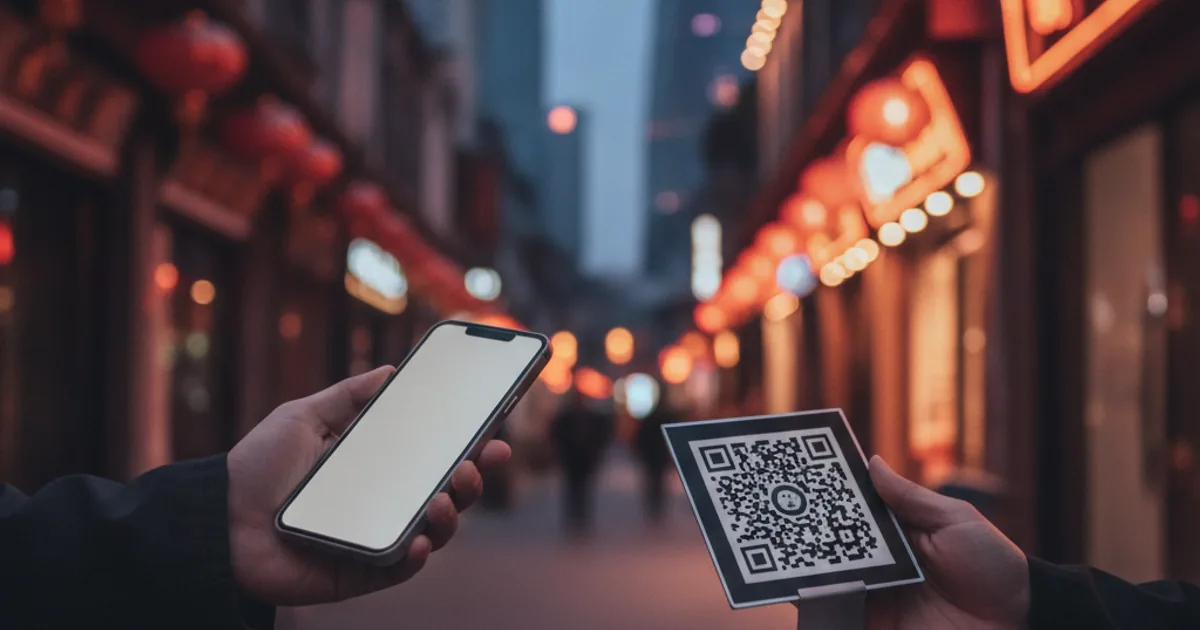
The best card to use in China won't solve your trip on its own. It needs to be linked to Alipay or WeChat Pay, because most restaurants, taxis, shops, and services accept payment via QR code, not the card machines Brazilians are used to.
The most reliable combination in 2026 is this: Alipay as your main wallet, WeChat Pay as a backup, a low-cost international card registered on both apps, another physical backup card, and a small amount of cash in yuan. In terms of cost, Picnic stands out because a purchase in yuan is debited from your digital dollar balance, with no IOF or Picnic's own margin, and is subject only to Visa's conversion, around 0.3%. If your balance started in BRL, the loading rate includes the provider's cost, currently also around 0.3%, with no Picnic margin.
There's also a wallet fee, separate from the card. In 2026, Tencent confirms a 3% WeChat Pay fee on applicable transactions with foreign cards. For Alipay, official guidelines published in 2024 document a waiver up to CNY 200 and a 3% fee above that amount. As the latest government guide warns that fees vary by product, always confirm the current rule on the app screen. New WeChat users may have the fee waived for 90 days, within a daily limit.
Picnic is a technology platform operating globally since 2021, offering, in Brazil and Europe, an international account with a Visa card linked to a digital dollar balance.
Summary: which card to bring to China
| Option | Role during the trip | Main cost | Limitation |
|---|---|---|---|
| Picnic linked to Alipay/WeChat | Main payment method | Around 0.3% on purchases in CNY, plus the cost of loading the balance; the wallet may show a 3% fee | Linking depends on app and issuer approval; prepaid card |
| Other international card | Backup if the first link or payment fails | May charge IOF, spread, and possible wallet fee, depending on the issuer | Can be expensive and subject to anti-fraud blocks |
| Physical card directly | Hotels, international chains, trains, POS locations | Depends on the issuer | Less accepted than QR code in small businesses |
| Cash in yuan | Emergencies, internet failure, informal commerce | Exchange or ATM withdrawal cost | Less practical; requires change and security |
The short answer for those who want convenience is: set up both apps before you travel and don't rely on a single card. The official guide for foreigners from the Chinese government confirms that Alipay and WeChat accept foreign phone numbers and international cards from brands like Visa and Mastercard, but makes an important caveat: the link must be authorized by the issuer.
Why a physical card isn't enough in China
In most of Brazil, tap and chip solve almost every purchase. In mainland China, the daily standard is different. The merchant shows you a QR code to scan, or you show your code for the cashier to scan. Alipay and WeChat Pay are the two most common gateways for this flow.
This doesn't mean Visa and Mastercard are useless. Hotels, airports, chain stores, some attractions, and some transportation accept foreign cards directly. The official guide states, for example, that train tickets can be bought with foreign cards and that the Beijing subway already accepts Visa and Mastercard issued outside China at the turnstiles of 27 urban lines.
The problem arises at small cafés, neighborhood restaurants, taxis, or the mini-app used to rent a bike. In these cases, having a great card in your physical wallet but no app set up is like having money in an account with no access to Pix.
That's why the criteria for choosing the best card to use in China have two parts:
- Cost: how much it charges to convert your money to yuan.
- Operation: whether Alipay or WeChat Pay can link and authorize that card.
A cheap card that doesn't work in the app isn't a good sole plan. An expensive card that works shouldn't be your only one either, because depending on the issuer and product, the payment may accumulate IOF, spread, and the wallet fee.
The bill has three layers, not just one
Comparing cards for China based only on IOF leaves out the biggest surprise. Payment with a foreign card linked to Alipay or WeChat Pay can have three distinct layers.
1. Loading the balance
This is the cost of turning BRL into the currency that funds the card. On a traditional card, conversion usually happens at the time of purchase or on the statement. On a global account, you convert beforehand and keep the balance. With Picnic, you deposit via Pix and load your digital dollar balance.
As of August 2026, Picnic does not charge its own margin or IOF when loading the balance. This doesn't mean zero total cost: with the conversion subsidy paused, the rate includes the provider's cost, currently around 0.3%, always shown before confirmation.
2. Card conversion to CNY
Renminbi is the official currency and CNY is the code used in transactions. Since Picnic's balance is in digital dollars, Visa converts USD to CNY at the time of payment. The network's margin is around 0.3%, with zero Picnic fee and zero IOF.
On a regular Brazilian credit card, IOF of 3.5% applies and the issuer may charge a spread. The current IOF is in Decree No. 12,499/2025. The spread varies by bank and, when present, is usually embedded in the rate, as explained in the currency spread guide.
3. Fee displayed by Alipay or WeChat Pay
This layer comes after the card and is charged by the Chinese wallet. For Alipay, the Chinese Ministry of Commerce guide, published in 2024, documents the following reference for linked international cards:
- up to CNY 200 per transaction: no additional fee;
- above CNY 200 per transaction: 3% fee on the amount.
For WeChat Pay, Tencent reconfirmed the 3% fee when announcing its 2026 promotion. For Alipay, an official guideline published by Shanghai in 2024 also separates the wallet fee from the exchange rate provided by the network and issuer. Since current government documentation says fees may vary, treat the app screen as the valid rule for your account.
This distinction matters. The card may be cheap and yet a purchase can become 3% more expensive when the app displays the fee. Read the total before confirming, not just the store price.
How much does a CNY 1,000 purchase cost
Let's use CNY 1,000 as an example. The goal isn't to convert to BRL at a rate that will soon be outdated, but to show who charges each part.
If the wallet displays the 3% fee
| Layer | Indicative cost with Picnic |
|---|---|
| Wallet fee (3%, if applied) | CNY 30 |
| Visa conversion from USD to CNY (~0.3%) | about CNY 3 |
| Prior loading from BRL (~0.3%) | equivalent to about CNY 3 |
| Total indicative cost | about CNY 36, or ~3.6% |
When applied, the wallet fee dominates the bill. Even so, a traditional Brazilian card would still add 3.5% IOF and, when charged, the issuer's spread on the processed amount. That's why a low-cost card still makes a difference.
For new WeChat users in 2026
On May 27, 2026, Tencent announced a promotional waiver for new international users. Those linking an international card for the first time may get 90 consecutive days without the 3% fee, counted from the first transaction and limited to CNY 1,000 per day in the 2026 initiative.
If the CNY 1,000 purchase is eligible, the CNY 30 disappears. Note that this amount uses up the entire daily waiver cap: another purchase on the same day will be charged the fee. The remaining card-related costs are about 0.6% for the full path from BRL with Picnic under current conditions. Confirm the promotion within WeChat before relying on it, as campaigns, eligibility, and limits may change.
Up to CNY 200 on Alipay
The official guideline published in 2024 documents a waiver of the additional Alipay fee in this range. If the current screen maintains this rule, a meal costing CNY 180 is subject only to the card cost and balance loading. It doesn't make sense to artificially split the bill without the merchant's agreement, but many everyday expenses naturally fall below this limit.
Alipay or WeChat Pay: which to set up first
Set up both. If you need to choose an order, start with Alipay and use WeChat Pay as a backup.
Alipay as your main wallet
Alipay has an interface more focused on payments and travel services. Besides paying in stores, the app brings together transport, taxis, tickets, and mini-apps. For tourists, it's usually the most direct path from downloading the app to making the first payment.
This doesn't make Alipay universal. A purchase may fail because the issuer didn't authorize the link, the merchant uses a type of QR code incompatible with foreign cards, or the app requested additional verification. That's why the second app isn't overkill.
WeChat Pay as a backup, and sometimes the cheapest
WeChat is a messenger, service platform, and wallet all at once. Some restaurants, contacts, and mini-apps work better within it. In 2026, the 90-day promotion for new foreign cards can also make WeChat cheaper for purchases above CNY 200.
Don't pick a single winner for the whole trip. Use the wallet that the merchant accepts and that shows the lowest cost on that screen.
How to register an international card on Alipay
Do this while still in Brazil, with access to SMS, the issuer's app, and your documents.
- Download Alipay from your phone's official app store.
- Create an account with your Brazilian number, including the
+55code. - Look for the Bank Cards or Cards section.
- Add your international card details.
- Complete the identity verification requested by the app. Passport is one of the accepted documents for foreigners.
- Complete the issuer's confirmation, which may arrive via SMS, notification, or authentication in the app.
- Check which card is set as the main one.
It's not necessary to load an "Alipay account" for the typical tourist flow. Payment is debited from the linked card. Guides that tell you to use Tour Pass or top up may be describing an old product or a specific alternative, not the current standard path.
How to register a card on WeChat Pay
WeChat calls its payment service WeChat Pay or Weixin Pay, depending on the interface.
- Download WeChat and create an account with your Brazilian number.
- Go to Me > Services > Wallet. Names may vary by language and version.
- Open Cards and select Add a Card.
- Enter your card details and complete identity verification.
- Authorize the link with the issuer.
- Check if the waiver campaign for new users appears in your account.
If the payment area doesn't appear, check your account's region and identity within the app. Avoid creating multiple accounts in a row, as this may increase security checks.
How to pay with Alipay or WeChat in stores
There are two main flows, both described in the official Chinese guide.
You scan the merchant's QR
Open Scan, point the camera at the QR code, check the recipient's name, and enter the amount if needed. Before confirming, check:
- amount in CNY;
- selected card;
- service fee;
- total to be processed.
The merchant scans your QR
Open Pay or Money, choose the card, and show the code to the cashier. Protect the screen as you would a card. Do not send a screenshot of your payment QR to anyone else.
In either flow, pay in CNY. If a physical terminal offers BRL or USD, choose yuan and refuse the merchant's conversion. The guide on paying in BRL or local currency explains why this conversion, called DCC, tends to use a worse rate.
What may not work with a foreign card
Linking an international card does not turn your foreign account into a Chinese account. Alipay's official guideline limits common use to daily purchases and excludes operations like personal transfers and financial products.
In practice, this means:
- Merchant QR: tends to be the best scenario;
- Transfer to a person: may not accept the foreign source;
- Red envelope and balance between users: may require a Chinese account or card;
- Mini-app: may accept the wallet, require further verification, or reject the card;
- Deposit and security hold: may require a credit card, not a prepaid.
If a payment fails, try the other app before concluding the card doesn't work in China. Then switch to your backup card. Only repeat the same attempt multiple times if the app instructs you to, as a series of refusals may trigger anti-fraud measures.
Physical card and cash are still necessary
Alipay and WeChat Pay depend on your phone, battery, internet, and real-time authorization. It's not wise to travel across the country relying on a single app.
Bring:
- your main card;
- a second card, stored elsewhere;
- the physical card, even if you plan to use only QR codes;
- a small reserve of yuan;
- a power bank;
- access to the issuers' apps and support numbers.
The Chinese government states that visitors can withdraw RMB at ATMs compatible with the card brand and exchange currency at banks, authorized exchanges, and kiosks. Withdrawals, however, may add ATM fees, issuer costs, and conversion. Prefer a planned withdrawal over several small ones. The guide on ATM withdrawals abroad shows the layers.
Cash serves as insurance against failure, not as your main means. Buying all your travel yuan in Brazil usually brings a tourism exchange spread and the risk of ending up with leftover currency that's hard to use later.
Where Picnic wins and where it doesn't replace credit
For purchases processed in CNY, Picnic reduces the cost on the Brazilian side: it doesn't charge IOF, doesn't add its own margin to the purchase, and absorbs Visa's international service fee. The network's conversion is around 0.3%. The card has no annual fee, works with a digital dollar balance, and allows virtual cards.
The legal framework for IOF needs to be precise. BCB Resolution No. 521/2025 included in the foreign exchange market specific activities with virtual assets, including international payments or transfers and obligations arising from international card use. The application of the 3.5% IOF on transactions with cards in this category still depends on supplementary regulation. Currently, IOF does not apply to these transactions.
There are honest limits. Picnic is prepaid: it doesn't offer a credit limit, installments, miles, or lounge access. Hotels, car rentals, or services that require a security deposit may prefer a credit card. The full analysis is in disadvantages of the Picnic card and in the comparison between debit and credit cards abroad.
There's also no guarantee that every user will be able to link any card. The Chinese government itself advises contacting the app or issuer if authorization fails. Register before your trip and keep redundancy.
Pre-flight checklist
- Download Alipay and WeChat from official app stores.
- Register your Brazilian number and complete identity verification.
- Link your main card to both apps.
- Link or bring a second card from another issuer.
- Check in WeChat if the 90-day waiver is active.
- Enable notifications and keep access to the issuers' apps.
- Save support contacts and bring a power bank.
- Set aside a small amount of RMB for emergencies.
- In-store, confirm CNY, recipient, card, and fee before paying.
- At a physical terminal, refuse BRL or USD and choose yuan.
So, what is the best card to use in China?
The best card to use in China is the one that combines low exchange cost, acceptance in both apps, and a real backup plan. For Brazilians, Picnic reduces the financial path to about 0.3% in the current balance loading and about 0.3% on purchases in yuan, with no IOF and no own margin. Up to CNY 200, official 2024 guidelines document a wallet fee waiver on Alipay. Above that amount, if the app shows 3%, that fee becomes the main cost. Confirm the rule and any promotion on each wallet's screen.
The most important decision, therefore, happens before your flight. Set up Alipay and WeChat Pay, test if the link was authorized, and bring another card and some cash. In China, redundancy is worth more than loyalty to a single wallet.
If you want to arrive with your card costs already under control, order the Picnic card, load your digital dollar balance, and register it on both apps before you travel. To understand the path behind the conversion, also see how an international card works and what IOF is.
Picnic is a technology platform that lets users independently interact with USDC, a U.S. dollar-pegged stablecoin issued by Circle, on public blockchains. USDC is not legal tender in Brazil.
Displayed exchange rates vary with market conditions. The final applicable amount is the one shown on the transaction confirmation screen. Cryptoassets involve risks, including volatility and loss of peg.
Picnic does not custody user assets and is neither a financial institution nor a virtual asset service provider. Sending and receiving U.S. dollar payments through a U.S. account is offered in partnership with Noah Savings Inc. Terms and conditions apply.
Information verified in August 2026.

Picnic team
Technology platform
The Picnic team creates content about international finance, cards and digital dollars.
Get your Picnic card
No annual fee, no IOF and no Picnic fee. Open your account in five minutes.
Open your account →