
Shopping in Ciudad del Este: 2026 Guide (Stores and Allowance)
Reading time: 9 min · Travel guide · Picnic
Ciudad del Este is one of the biggest shopping hubs in South America, with electronics, perfume, imported goods and clothing at prices that are often well below Brazil's. But the discount on the price tag disappears fast if you pick the wrong store, go over the US$ 500 allowance or accept the wrong conversion on the card machine. This guide shows where to shop, what is worth buying and how to pay as little as possible.
The Paraguayan city sits on the other side of the Friendship Bridge (Ponte Internacional da Amizade), connected to Foz do Iguaçu, in the Brazilian state of Paraná. You can cross on foot, by car or by local transport, and within minutes you are in the middle of one of the busiest retail districts on the continent. The catch is that the sheer number of stores is misleading: not every shop window has a good price, and not every card machine charges what it seems to.
Where Ciudad del Este is and how it works
Ciudad del Este is in eastern Paraguay, right on the border with Brazil. The most common crossing is the Friendship Bridge, from Foz do Iguaçu. Day-trippers usually cross in the morning and come back in the afternoon, before the bridge's peak traffic.
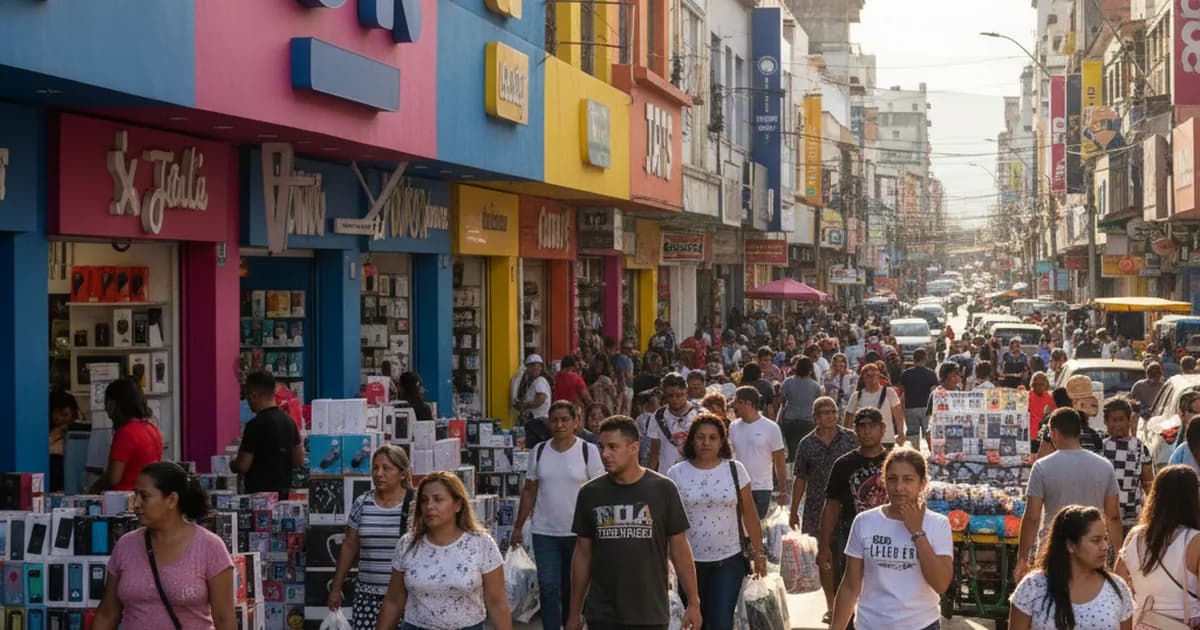
The shopping is concentrated in a few blocks from the end of the bridge: department mega-stores, electronics arcades, perfume and cosmetics shops, and a huge number of small importers. The density is high, so it pays to arrive with a list of what you are looking for instead of deciding everything on the spot.
One point that changes your cost: in Paraguay, purchases are charged in guarani (PYG), the local currency. Even when the salesperson quotes the price in dollars or reais, the card machine usually processes it in guarani and converts it into your card's currency. We come back to this in the payment section, because that is where most people lose money without noticing.
The best stores in Ciudad del Este
There is no single "best store": there is a best store for each category. These are the most sought-after names, organized by what each does well.
Shopping China
The anchor of shopping in the city and the name almost everyone mentions first. It works like a mega department store, with electronics, computers, perfume, toys, home goods and clothing under one roof. The advantage is variety and predictability: labeled prices, an organized space and large stock. The brand has more than one location in the border region, so confirm which one is in Ciudad del Este before planning your visit.
Casa Nissei
A long-standing name in the city, strong in electronics, small appliances, computers and perfume. It is a good stop to compare the price of an item you already saw at Shopping China, because competition between the big stores tends to push down the price of popular products.
Mega Eletrônicos
As the name suggests, the focus is electronics: phones, headphones, laptops, accessories and games. Worth it if you have a specific model in mind and want to compare the price range across two or three big stores before buying.
New Zone and New Zone Importados
A mix of imported goods that goes beyond electronics: accessories, gifts, home items and assorted products. Good if you want to come back with several smaller things instead of one expensive product.
Cell Shop and Toku Importados
Go-to stores for phones, accessories and small imported goods. These are the kind of stores where you should check where the product comes from and the warranty policy before paying, especially on higher-priced electronics.
What is worth buying (and what isn't)
The general rule is simple: it pays to buy what is expensive in Brazil because of import taxes, even after adding the cost of the dollar. It does not pay to buy what is cheap in Brazil or too heavy for the allowance.
Usually worth it:
- Electronics and computers: phones, headphones, laptops, monitors, components and accessories. This is the category with the biggest price gap and also the highest ticket, so it is where your payment method matters most.
- Imported perfume and cosmetics: perfume, makeup and skincare from international brands often come out well below Brazilian prices.
- Drinks and gift items: within the quantity limits allowed (for example, up to 12 liters of alcoholic drinks per adult in baggage), some imported products are good value.
Usually not worth it:
- Products priced similarly to Brazil (not worth the risk or the use of your allowance).
- Very bulky or heavy items that are hard to declare and carry.
- Anything without a clear warranty, especially branded electronics.
Before paying a lot for a single item, check the Brazilian price on the same day. The gap needs to be big enough to cover the effort of the trip and any tax on the amount above the allowance.
The duty-free allowance in 2026
Travelers entering Brazil by land have a duty-free allowance of US$ 500 per person, which can be used once every 30 days. The allowance is individual and non-transferable, so you cannot combine yours with someone else's to cover a single expensive product. These figures match the Receita Federal's traveler guide (in Portuguese) as of November 2026; border rules change, so confirm before you travel.
If your total purchases go over US$ 500, the excess is taxed at 50% of the amount above the allowance. You declare it with the e-DBV (Electronic Traveler's Goods Declaration), filed online with the Receita Federal before you cross. Travelers arriving in Brazil by air have a bigger allowance, US$ 1,000, but for Ciudad del Este the land rule is the one that applies. If you have never filled in the form, see the e-DBV step by step.
Planning around the allowance changes the trip. If you travel with family, each person has their own allowance, which increases the total you can bring in tax-free. And if you plan to buy an item above US$ 500, work out the tax on the excess first to see whether it is still worth it.
How to pay less
This is the part almost no shopping guide explains properly, and it is where a good share of the savings lies.
Always pay in guarani, the local currency
When the card machine asks whether you want to pay in reais (or dollars) instead of guarani, it is offering what is called dynamic currency conversion. It looks like a favor, but it carries a high spread set by the terminal, almost always worse than your card network's conversion. The golden rule in any country is to decline and pay in the local currency, which in Ciudad del Este is the guarani. The same goes for online purchases on foreign websites that offer to "show the price in reais" at checkout.
The weight of IOF and spread on a traditional card
On a regular bank-issued international credit card, every purchase abroad carries IOF of 3.5%, the rate set for card purchases abroad in 2025 by Decree No. 12,499/2025 and in force in 2026, plus the FX spread the bank applies to the exchange rate, which is often estimated at around 4% to 6% (it varies by issuer). Added together, the extra cost is roughly 7.5% to 9.5% on each purchase. On a US$ 500 electronics purchase, that is about US$ 38 to US$ 48 more in fees alone, without a separate line for it on your statement.
Spending in dollars avoids most of it
When your card balance is already in dollars, there is no real-to-dollar conversion at the time of purchase. That is how the Picnic card works: you convert reais into digital dollars with zero Picnic margin and no IOF on the conversion, and when you spend, the Visa network converts from dollars to guarani, applying only its own FX margin of around 0.3%. There is no Picnic spread and no annual fee.
That is not zero total cost if you start from reais. The conversion subsidy Picnic used to offer is currently paused, so the BRL to USD rate includes the provider's cost, currently between 0.3% and 0.5% according to the Picnic fee table (in Portuguese), always shown in the app before you confirm. Starting from reais, the full path for a purchase in guarani comes to about 0.6% to 0.8%, still among the lowest costs available in Brazil for this kind of purchase.
On IOF: BCB Resolution No. 521/2025 classified certain digital dollar operations as foreign exchange operations. Whether the 3.5% IOF applies to card transactions in this category still depends on complementary regulation; currently, IOF does not apply to them (checked in November 2026).
In practice, on that US$ 500 purchase, the difference between a traditional card and spending in dollars with Picnic comes to roughly US$ 34 to US$ 46. Over a whole shopping trip, where high-ticket electronics are the norm, the savings add up to the cost of the trip itself.
Card availability: new Picnic card orders have been temporarily paused since September 22, 2026 (notice in Portuguese), with no confirmed date for reopening. Existing cards keep working normally until December 20, 2026, 23:59 UTC; after that, cardholders continue on Gnosis Pay's new infrastructure through an in-app upgrade, which starts with the virtual card (the physical card has no confirmed date yet). If you don't have the card yet, don't count on it for an upcoming trip.
Worked example: US$ 500 in electronics
| Payment method | IOF | Spread / margin | Extra cost on US$ 500 |
|---|---|---|---|
| Bank credit card | 3.5% | 4% to 6% (bank, estimate) | US$ 38 to US$ 48 |
| Picnic, balance already in dollars | 0% (see note) | ~0.3% (Visa margin) | ~US$ 1.50 |
| Picnic, converting from reais via Pix | 0% (see note) | 0.3% to 0.5% (provider) + ~0.3% (Visa margin) | ~US$ 3 to US$ 4 |
The IOF rate and the network margin can be checked; the bank spread varies from one institution to another and is a typical market estimate for 2026. The conclusion does not change: paying in the local currency and spending from a dollar balance brings the cost of the purchase down.
Shopping trip checklist
- Make a list of models and reference prices in Brazil before you cross.
- Bring ID and keep the e-DBV in mind in case you go over the US$ 500 allowance.
- Cross early to avoid the peak on the Friendship Bridge.
- Compare the same product in two or three big stores before buying.
- Check the warranty and origin of high-ticket electronics.
- At the card machine, decline paying in reais and choose guarani.
- Prefer spending from a dollar balance to avoid IOF and spread.
- Keep your receipts for the declaration and the warranty.
Is Ciudad del Este worth it in 2026?
For anyone who lives near the border or is already going to Foz do Iguaçu, yes, especially if your list includes electronics, computers or perfume, the categories with the biggest price gaps. The secret is to treat the trip like a project: a ready list, the allowance worked out, the right stores for each item and, above all, a payment method that does not hand back in FX what you saved at the store.
Shopping China and the big stores take care of variety. The allowance and the e-DBV take care of the legal side. And your choice of card takes care of the part most people forget: how much of your purchase turns into fees. To see how this reasoning applies across the whole country, the guide to the best ways to spend money in Paraguay complements this one, and the overview of how an international card works helps you choose before you travel.
Pay in the local currency, spend in dollars and bring home the savings, not the fees. If you already have the Picnic card, take it on your trip; if you don't, check current card availability before planning around it.
Picnic is a technology platform that lets users independently interact with USDC, a U.S. dollar-pegged stablecoin issued by Circle, on public blockchains. USDC is not legal tender in Brazil.
Displayed exchange rates vary with market conditions. The final applicable amount is the one shown on the transaction confirmation screen. Cryptoassets involve risks, including volatility and loss of peg.
Picnic does not custody user assets and is neither a financial institution nor a virtual asset service provider. Sending and receiving U.S. dollar payments through a U.S. account is offered in partnership with Noah Savings Inc. Terms and conditions apply.
Information verified in November 2026.

Picnic team
Technology platform
The Picnic team creates content about international finance, cards and digital dollars.
Get your Picnic card
No annual fee, no IOF and no Picnic fee. Open your account in five minutes.
Open your account →