
Best Card to Use in the UK in 2026: Real Cost and Contactless
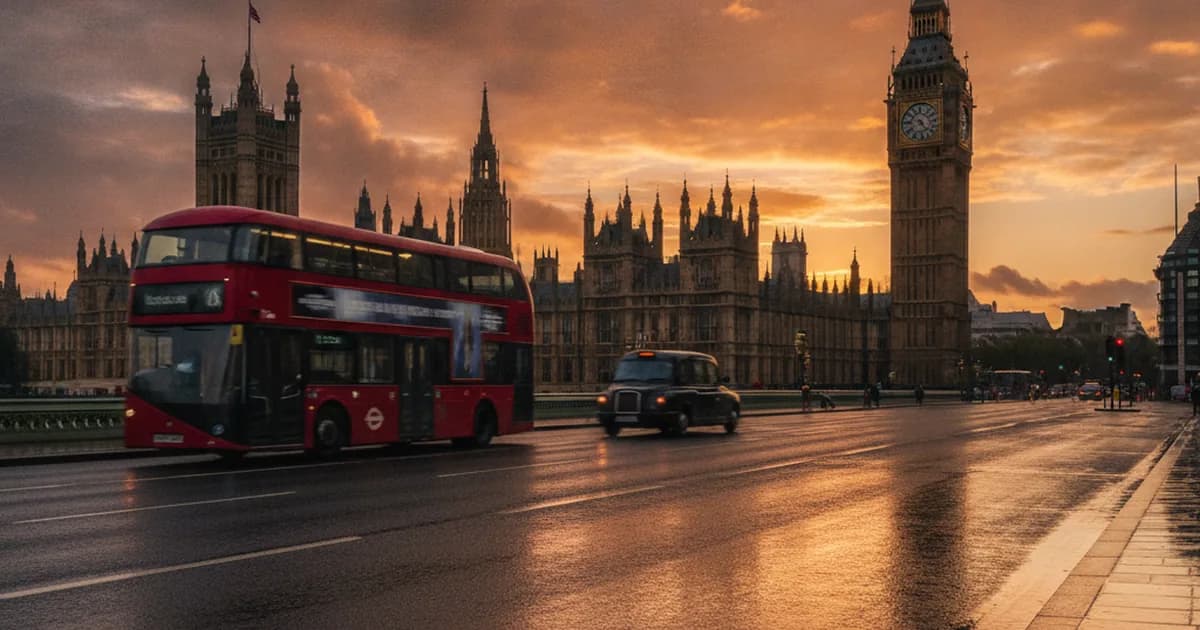
London is one of the easiest cities in the world to get around without cash. You tap your card at the Tube gates, on the bus, at the pub and in shops, and that is it. So choosing the best card to use in the UK is not about how many pounds to carry in notes. It is about finding out which card charges the least behind each of those taps. The pound sterling is not the US dollar, so every purchase in the UK involves a currency conversion, and that conversion is where the most common Brazilian cards stack up costs you never see itemised.
The gap is large. On the same spending in pounds, a conventional Brazilian credit card starts with 3.5% IOF (Brazil's tax on financial and foreign-exchange transactions) and then adds the issuer's spread, so the total is often several percent. A route without IOF and without an issuer spread stays below 1%. The cost logic is the same as in any destination, as explained in the guide to the best card to use in Europe. What changes in the UK is the currency: since the pound is not the dollar, there is always a conversion, so the costs on the Brazilian side decide everything.
New Picnic card orders are temporarily paused. Since September 22, 2026, first-time card orders have been unavailable, with no confirmed reopening date. According to the official notice (in Portuguese), existing cards keep working normally until December 20, 2026, at 23:59 UTC; after that, use continues through an upgrade to the card issuer's new infrastructure, which starts with the virtual card. The Picnic examples in this guide apply to people who already hold the card.
Picnic is a technology platform that has operated globally since 2021. Its card is an international Visa debit card that spends a digital-dollar balance. The data in this article was checked in November 2026.
Summary: card costs for the UK in 2026
| Option | IOF (Brazilian side) | Exchange margin | Rate in the UK | Indicative Brazilian-side cost |
|---|---|---|---|---|
| Picnic (existing cardholders) | No IOF line under current product conditions | 0% Picnic fee; 0.3%–0.5% provider cost on Pix top-up | market rate | about 0.6%–0.8% (top-up + ~0.3% Visa conversion) |
| Global account / Wise (standard) | 3.5% | conversion fee from 0.4%, varies by currency | market rate | about 3.9% or more |
| Wise with Rende+ | 1.1% on eligible BRL conversions | conversion fee from 0.4% | market rate | about 1.5% or more, plus investment costs |
| Brazilian bank or digital-bank card | 3.5% | issuer spread, varies by issuer | market rate | 3.5% plus spread |
| Traditional credit card | 3.5% | issuer spread, often the highest | market rate | 3.5% plus spread, often several percent |
| Pound notes bought in Brazil | 3.5% on foreign cash | exchange bureau spread | bureau rate | 3.5% plus a typically high spread |
Every card gets the same market rate for the pound in the UK. There is no special tourist exchange rate as there is in Argentina. That is why the last column, the cost on the Brazilian side, is what separates one option from another. The sections below show where each figure comes from. These are approximate, additive comparisons, not quotes: the exact base, timing and amount change the result.
Why the pound costs more to spend than the dollar
There is an important difference between spending in dollars and spending in any other currency. When the purchase is in dollars, a dollar-balance card does not need a conversion inside the Visa network. When the purchase is in pounds, euros, yen or any other non-dollar currency, there is a conversion, and it carries a cost.
For a card that spends a dollar balance, that means a cost floor in the UK: Visa's currency conversion, about 0.3% according to Picnic's fee table. It is small. The game, then, is to avoid paying much beyond that floor. A route without IOF and without an issuer spread gets close to it. A typical Brazilian credit card adds IOF and the bank's spread on top.
It is also worth noting what the UK does not have: no tourist exchange rate as in Argentina, and no advantageous parallel rate. The rate your card uses is the market rate. That simplifies the decision. Because the local exchange rate is the same for everyone, choosing the right card means choosing the one that charges least before the purchase reaches London.
The Brazilian-side costs: IOF, spread and conversion
On a purchase in pounds, your card can charge several layers of cost on the Brazilian side. Understanding them is what lets you pick a route that removes most of them. For the full picture, the guide on how an international card works (in Portuguese) follows each purchase step by step.
1. IOF
Under Decree 12,499/2025, which amended the IOF regulation, the rate is 3.5% for international purchases and withdrawals abroad made with cards, for loading international prepaid cards and for buying foreign cash. For most cards, it is the largest single cost of a UK trip. Some older guides still quote 5.38% or 6.38%; those rates are out of date.
Picnic's Pix card top-up has no IOF line under its current product conditions: the card spends a digital-dollar balance rather than going through a conventional card foreign-exchange settlement. BCB Resolution 521/2025 classified certain fiat-referenced virtual-asset transactions as foreign exchange, and IOF treatment of card transactions in this category still depends on complementary regulation. Recheck the current treatment before you travel rather than assuming it is permanent. For the background, see what IOF is (in Portuguese).
2. Issuer spread
This is the margin a bank or fintech adds to the exchange rate. It varies widely between issuers, and it is the most opaque part of the bill, because few issuers show it separately: it is built into the rate on your statement. The concept is explained in exchange-rate spread (in Portuguese).
On Picnic, the swap from reais to dollars happens earlier, when you top up the card by Pix. The fee table lists a 0% Picnic fee on that top-up and a 0.3%–0.5% provider cost relative to the reference rate. Funding is not free just because the Picnic fee is zero, so check the net amount on screen before confirming.
3. Visa conversion
A UK purchase is in pounds, so a dollar-balance card needs a conversion. Picnic's fee table lists about 0.3% for Visa's conversion on purchases in currencies other than the dollar, with no Picnic fee on the purchase. You can check the rate Visa uses on its official exchange rate calculator.
Comparison: card options for the UK
Each type of card combines these layers differently. They all get the same market rate for the pound, so what separates them is the Brazilian side.
Picnic (existing cardholders)
On a Pix-funded balance spent in pounds, the indicative cost is about 0.6%–0.8%: 0.3%–0.5% provider cost on the top-up plus about 0.3% Visa conversion, with no Picnic fee on either step. Because the balance is in digital dollars, you spend in pounds at the time of purchase, at the market rate. The card works with Apple Pay and Google Pay where available and has virtual cards. The honest caveat: it is a debit card linked to your balance, so there is no credit line, no instalments and no traditional points. That trade-off helps you see who the Picnic card makes sense for. And remember the pause notice above: new orders are not available right now. If annual fees are part of your decision, the guide to international cards with no annual fee covers the wider market.
Global accounts and exchange fintechs (Wise and similar)
A solid option and much cheaper than a traditional bank. Wise uses the mid-market rate and advertises a conversion fee from 0.4%, varying by currency. On the standard route, converting reais carries 3.5% IOF; Wise's card page states 1.1% IOF on BRL conversions into dollars, euros and pounds when its Rende+ investment feature is enabled, which brings its own costs and risks. It is predictable and transparent, and the detailed Picnic vs. Wise comparison shows where each one has the edge. For the UK, the weak point is the 3.5% IOF on the standard route, which on its own exceeds the indicative Picnic cost above.
Brazilian bank and digital-bank cards
Convenient if you are already a customer, with everything in one app. They pay the 3.5% IOF and add an issuer spread that varies by bank and product. Check your issuer's published rate or the rate on a recent foreign statement. They usually win on convenience, not on price.
Traditional credit cards
The advantage is the billing period, credit limit and points. On travel costs, they are usually the most expensive: 3.5% IOF plus an issuer spread that is often the highest of these options. As an illustration, on £2,000 of spending in London, the 3.5% IOF alone is £70; with a hypothetical 2% spread, the Brazilian-side cost reaches about £110. On the same £2,000, a Picnic route at 0.6%–0.8% is about £12–£16. That gap is real, and your statement does not show where it went.
Cash
In the UK, cash is a backup, not a strategy. Buying pounds at a Brazilian exchange bureau carries 3.5% IOF on foreign cash plus the bureau's spread, and you are locked into the day's rate. London is so card-oriented that many places barely use cash, and London buses have not accepted cash fares since 2014. Pay for nearly everything by card and keep a small reserve in pounds for the rare places a card does not reach.
Contactless in London: Tube, buses and automatic capping
This is the biggest advantage of spending in the UK. Transport for London (TfL) accepts contactless cards and mobile devices, such as a phone or watch, for pay-as-you-go travel on all its services, including cards issued abroad. You do not need to buy an Oyster card or a paper ticket: tap the same card you use in shops on the reader at the Tube, bus, DLR and London Overground, and the fare is charged.
The best part comes next. TfL adds up your journeys and applies a daily cap, plus a weekly cap that runs Monday to Sunday. In 2026 the Zones 1–2 caps are frozen at £8.90 per day and £44.70 per week (the seven-day Travelcard price, which also applies to the equivalent pay-as-you-go cap). However much you travel within those zones, you do not pay more than the cap for the period. Some services, such as the Heathrow Express, do not count towards capping, so check before you ride.
Two practical rules. First, TfL says to always use the same card or device to touch in and out; if you switch between your physical card and your phone, or between cards, the system treats them as separate and the cap does not combine. Second, TfL notes that overseas transaction fees may apply to non-UK cards, so every fare carries your card's Brazilian-side cost. With a low-cost route such as the Picnic one described above, that cost stays below 1% of each fare instead of 3.5% IOF plus spread.
A tip: Oyster still exists and suits people who live in or spend a long time in London, but for visitors contactless is simpler, caps the same way and does not require buying or returning a card. The how many euros to take to Europe guide applies similar contactless reasoning, and a map of which cities accept cards directly at the gates is in how to pay for public transport and Uber abroad (in Portuguese).
Never agree to pay in reais: decline DCC
In shops, restaurants and at ATMs, the terminal sometimes offers to charge you in a currency other than pounds, usually reais or dollars. This is dynamic currency conversion, or DCC. Visa explains that with DCC the rate and charges are set by the merchant or ATM operator, not by your card; the option must be optional and the terms shown. In practice it tends to cost more than paying in local currency.
The rule is simple: always pay in pounds and let your card handle the conversion. If the terminal or ATM asks whether you want to pay in reais or dollars, decline and choose GBP. The full reasoning is in paying in reais or local currency (in Portuguese).
Withdrawing pounds: when it is (not) worth it
London is so card-oriented that withdrawing cash is rarely necessary. If you need to, know the costs first. Almost every UK ATM is on the LINK network, and LINK says most withdrawals are free for cardholders of its members but that charges can apply; some machines, often independent ones in convenience stores, charge a fixed fee per withdrawal. The machine must show any fee before you proceed. On a conventional Brazilian card, 3.5% IOF also applies to withdrawals abroad.
On Picnic, the fee table allows up to five withdrawals or US$200 per month, whichever comes first, with no Picnic fee; beyond that allowance it charges 2% per withdrawal, and the ATM operator may charge its own fee. ATM limits are 250 USDC.e per withdrawal and 500 USDC.e per day. A conversion to pounds still applies.
So cash should be the exception. Pay by card whenever possible and withdraw only the little you need in notes. If you do withdraw, prefer bank ATMs over independent machines, and decline DCC on the ATM screen too. The general rules are in ATM withdrawals abroad (in Portuguese).
A heads-up: Great Britain no longer refunds VAT to tourists
Many people assume this wrongly. Several countries in continental Europe refund part of the VAT (value-added tax) to visitors from outside the bloc when they leave. Great Britain (England, Scotland and Wales) no longer does. According to the UK government's guidance on tax-free shopping, in Great Britain goods are only tax-free if they are delivered straight to an address outside the UK, and not every retailer offers this. So when you shop in London, you pay the 20% VAT built into the price and get nothing back at the airport.
The exception is Northern Ireland, which still has a VAT refund scheme for visitors who live outside Northern Ireland and the EU, with conditions: you need a VAT 407(NI) form from the retailer and must take the goods out of Northern Ireland and the EU within three months. A refund is not available if you travel from Northern Ireland straight to Great Britain.
For a typical London trip, the practical point is not to plan around a tax refund. The real saving comes from the exchange costs, not from a refund that will not happen, and that is where the right card makes the difference.
How much cash to take
There is no magic number, but a practical reference: carry a small reserve in pounds for your first hours and for rare situations without a card, such as a market stall or a cash tip. Many restaurants add a discretionary service charge, often 12.5%, to the bill, and it can be paid by card. For a one-week city trip, around £50 to £100 in notes usually covers the essentials, because nearly everything, including transport, works with contactless. Treat that as a rule of thumb, not a guarantee. The rest goes on the card. To compare currency strategies for travel, see the best way to take dollars on a trip (in Portuguese). And before you fly, check whether you need a UK ETA.
Final summary
The UK has no tourist exchange rate. Every card gets the same market rate for the pound, so the saving does not come from the local rate but from choosing a card that does not eat your money on the Brazilian side. Three layers weigh on the bill: IOF (3.5% on the standard route for cards and cash), the issuer spread (which varies widely between cards that convert at purchase) and the conversion cost for non-dollar currencies (about 0.3% on Visa for a dollar-balance card). For existing Picnic cardholders, a Pix-funded balance spent in pounds costs about 0.6%–0.8% in total under current conditions.
Three reminders before you board: use the same contactless card or device on all London transport to benefit from automatic capping, always pay in pounds and decline DCC, and do not count on a VAT refund in Great Britain. If you already hold a Picnic card, check the current quote in the app against the alternatives at the same time, fund only what you plan to spend and keep a backup card from another provider.
Picnic is a technology platform that lets users independently interact with USDC, a U.S. dollar-pegged stablecoin issued by Circle, on public blockchains. USDC is not legal tender in Brazil.
Displayed exchange rates vary with market conditions. The final applicable amount is the one shown on the transaction confirmation screen. Cryptoassets involve risks, including volatility and loss of peg.
Picnic does not custody user assets and is neither a financial institution nor a virtual asset service provider. Sending and receiving U.S. dollar payments through a U.S. account is offered in partnership with Noah Savings Inc. Terms and conditions apply.
Information verified in November 2026.

Picnic team
Technology platform
The Picnic team creates content about international finance, cards and digital dollars.
Get your Picnic card
No annual fee, no IOF and no Picnic fee. Open your account in five minutes.
Open your account →