
PAXG explained: tokenized gold, costs and key risks
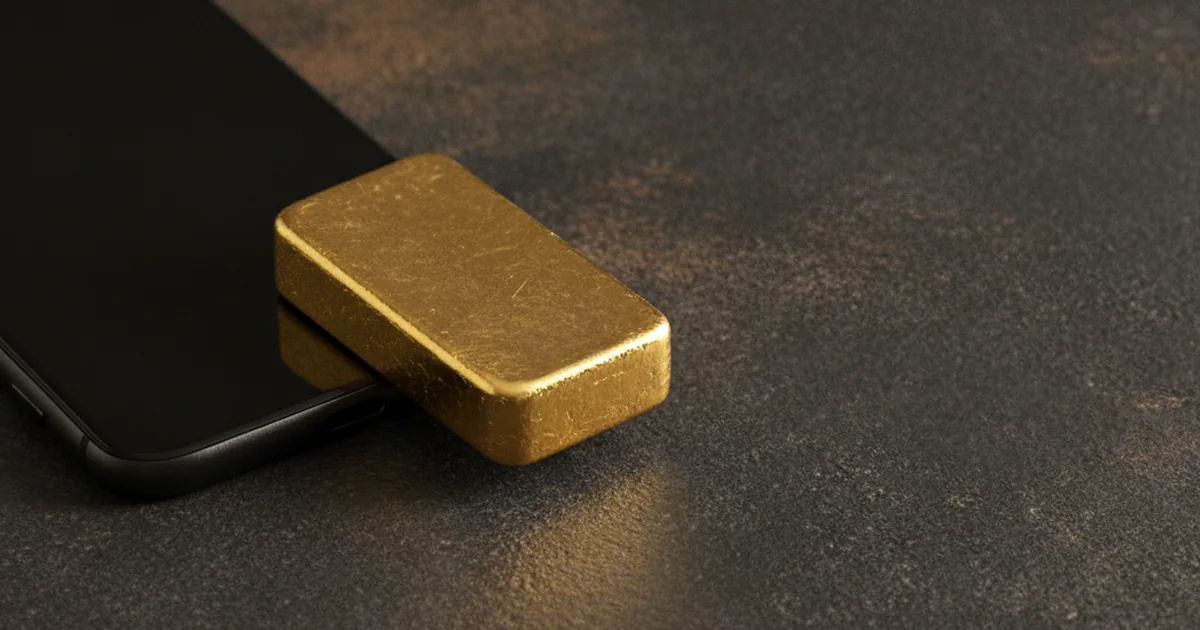
Buying a gold-backed token does not put a gold bar in your drawer. PAXG, or PAX Gold, represents ownership of physical gold held by an issuer's custody arrangements. You can hold the token in your own wallet, but you still depend on someone else to safeguard the metal and honor the token's terms.
That distinction matters more than the word “gold.” PAXG offers a way to hold fractional gold exposure alongside crypto. It is not a dollar stablecoin, an interest-paying account or a promise that your investment cannot fall.
This guide separates four decisions that are often bundled together: owning gold, choosing a token issuer, choosing a network and choosing where to hold the token. It also compares PAXG with physical bullion, gold ETFs and Tether Gold (XAUt). Product documentation and availability checks are dated November 14, 2026. Examples below are illustrative, not live prices or investment recommendations.
What is PAXG, and how much gold backs one token?
One PAXG represents one fine troy ounce of London Good Delivery gold, approximately 31.1 grams of pure gold content. A troy ounce is a precious-metals weight measure, not an ordinary ounce. Paxos Trust Company, N.A. issues PAXG; the metal is held in professional vaults rather than in your wallet. The Paxos product documentation describes the backing and custody structure.
“Allocated” gold means identified bars are assigned to holders' interests. It is different from simply receiving an unsecured promise for an equivalent quantity of metal. A small holding can represent a share of a bar, not a miniature bar stored separately with your name on it.
You do not need a whole PAXG to obtain exposure. For example, 0.1 PAXG represents roughly 3.11 grams of fine gold. The trading venue can still impose its own purchase minimum and fees.
The key distinction from a dollar stablecoin is the reference asset. PAXG follows gold, not US$1. Calling it “stable” does not mean its value is stable in dollars, Brazilian reais or your spending currency. If you are comparing issuer-backed tokens, our guide to USDT risks, in Portuguese, explains why the backing matters as much as the ticker.
How can you check the backing?
Start with two separate checks: the issuer's reserve reporting and the identity of the token you actually hold.
Paxos publishes monthly reserve and attestation reports. Those reports provide evidence about backing at the reporting date. They are not a continuous guarantee of market liquidity, future solvency or the security of your wallet.
The PAXG allocation lookup offers Ethereum and Solana wallet lookups for information about associated bars. It does not offer a Polygon lookup; do not assume a bridged token balance will appear there. A custodial exchange may pool customers' holdings in its own address, so entering your exchange deposit address may not identify your individual allocation.
A useful verification routine is:
- Open the issuer's website directly, rather than a link sent by an unsolicited “support” account.
- Check the report's reference date, scope and named asset. A report about a dollar token is not evidence for PAXG.
- Verify the network and token contract through official issuer or platform information. The symbol alone is not identification.
- If your token is a bridged representation, identify the bridge and redemption path as well. A different contract can add another dependency between you and the issuer's original token.
An absent lookup result is a reason to investigate the network and holding structure, not automatic proof that the gold is missing.
Can you redeem PAXG for a physical gold bar?
There is a redemption process, but holding a fraction of PAXG does not mean you can order a small bar for home delivery.
Under the PAX Gold terms, direct redemption for a London Good Delivery bar requires at least 430 PAXG plus applicable fees per bar. Customer verification, eligibility and delivery arrangements also apply. Check the current terms before transferring anything to the issuer; buying through another platform does not automatically establish a verified Paxos account.
Separate these three exits:
| Exit | What you receive | What to check |
|---|---|---|
| Sell on a secondary market | Another token or currency, depending on the venue | Executable price, fees and available liquidity |
| Convert or redeem through Paxos | The selected eligible settlement asset | Account approval, supported service and issuer terms |
| Request physical bullion | A qualifying bar through the delivery process | Minimum, due diligence, fees and logistics |
For a small position, the first route may be the practical one to evaluate. Do not confuse it with a contractual right to immediate cash at the displayed gold price. Selling to another trader requires an available buyer or liquidity pool.
PAXG vs physical gold vs a gold ETF
All three can provide exposure to gold, but they place different responsibilities on you.
| Question | PAXG in your own wallet | Physical bullion in your possession | Gold ETF |
|---|---|---|---|
| What do you hold? | A token with rights defined by its issuer | The metal itself | Shares in the particular fund or trust |
| What must you secure? | Wallet access and token/network compatibility | Storage, authenticity and physical access | Brokerage access and the chosen investment product |
| What can reduce your return? | Trading costs, network costs and price differences | Dealer premium, resale discount and storage or insurance | Fund expenses, trading costs and tracking differences |
| Can you receive a bar? | Subject to issuer conditions and minimums | You already possess the metal | Depends on the structure; often not available to individual retail holders |
Not every gold ETF owns physical bullion; some use derivatives or other structures. Read the specific product documents. For example, SPDR Gold Shares (GLD) aims to reflect bullion prices after expenses, and its individual shares are not redeemable directly from the fund.
Physical possession can be relevant if avoiding reliance on a token issuer is your objective. An ETF can suit someone who wants exposure through a brokerage rather than managing a crypto wallet. PAXG is another structure, not an automatic upgrade over both.
PAXG vs XAUt: what actually changes?
Tether Gold, commonly written XAUt or XAUT, is another gold-backed token. The Tether Gold information document identifies its issuer and describes its backing and redemption conditions.
| Feature | PAXG | XAUt |
|---|---|---|
| Issuer | Paxos Trust Company, N.A. | TG Commodities, S.A. de C.V. |
| Gold reference per token | One fine troy ounce | One fine troy ounce |
| Vault location described by the issuer | London | Switzerland |
| Direct physical redemption | Conditions, verification and whole-bar minimum apply | Conditions, verification and whole-bar requirements apply; delivery is described within Switzerland |
Neither ticker tells you which has the better executable price for your trade. Compare the same purchase amount, network, destination and planned exit. The token with the lower apparent unit price may have a wider spread or a more expensive withdrawal.
The comparison above is not a recommendation of either issuer. Nor does it imply that a platform listing PAXG necessarily lists XAUt.
What are the main risks of tokenized gold?
Gold can fall, and currency changes matter
Gold backing does not protect the purchase price. A Brazilian investor also needs to distinguish the gold return in dollars from the return in reais.
Suppose gold rises 10% in dollars while the dollar falls 10% against the real. Ignoring costs and token price differences, the combined result is 1.10 × 0.90 − 1 = −1% in reais. The figures are hypothetical. A positive gold chart in one currency is not enough to infer your result in another.
Your wallet does not remove the issuer
Self-custody gives you control over your assets rather than leaving the token balance with an exchange. It does not move the underlying gold out of its vault or override the issuer's contractual powers.
Paxos's illegal-activity policy describes legal directives affecting access to issuer-backed tokens, including PAXG. The PAXG terms also provide for freezes and upgrades. In practice, “held in my wallet” is not equivalent to “impossible for the issuer to restrict.”
Liquidity, contracts and bridges are separate risks
A quote can differ from the reference gold price, especially for a large order in a thin market. A token traded around the clock is not necessarily liquid at every size around the clock.
You also take software and operational risks: a malicious approval, a compromised wallet or an unsupported receiving network can prevent access or cause loss. A bridge can add contract and custody dependencies on top of those of PAXG itself. A successful small transfer does not prove that every larger trade will have the same execution price.
What does PAXG cost, and does it earn interest?
Holding PAXG by itself does not generate a contractual interest payment. A service offering yield on top of PAXG adds its own mechanism and risks; that yield is not the gold backing.
As checked on November 14, 2026, the Paxos product overview and fee schedules state that there is currently no gold storage charge. This is not an irrevocable promise: section 15.2 of the PAXG terms permits future storage charges through token issuance that dilutes holders, with at least 30 days’ notice of the methodology and timing.
The terms also specify a US$2 monthly inactivity charge for a Paxos account with a non-zero balance and no issuance or redemption activity for at least 12 months, subject to applicable law. Do not apply that account charge automatically to a token held in an external wallet. Issuer creation, redemption and conversion schedules are also separate from third-party trading costs; check the schedule for the service you will actually use.
Before comparing two offers, write down:
- How much currency or crypto leaves your balance.
- How much PAXG you actually receive after all quoted costs.
- What a sale of that amount would return at an executable quote.
- What withdrawal or network charges apply if you move it.
“No storage fee” is not the same as “free to buy and sell.” Keep transaction records for tax reporting; tokenization does not create a general tax exemption. For Brazilian reporting context, read our DeCripto guide. This article does not determine your tax treatment.
How does PAXG fit into Picnic?
A check of Picnic’s purchase-catalog data on November 14, 2026 found the PAXG family listed. A listing is not an executable quote: availability for your account, amount and route must be checked in the app. No purchase was executed as part of this check.
The listed implementations included Ethereum, Polygon and Arbitrum. On Polygon, the contract 0x553d3D295e0f695B9228246232eDF400ed3560B5 identifies itself as “Paxos Gold (PoS)”, a bridged representation, rather than the original Ethereum issuance. This adds bridge dependency and is not covered by the issuer’s Ethereum/Solana allocation lookup. The network actually selected matters more than the family name in the catalog.
Picnic is a technology platform whose app lets you buy, sell and hold crypto with control over your assets. Picnic does not issue PAXG or hold its underlying gold. Direct redemption is a separate Paxos process, requiring its own account verification and a supported deposit network; do not send a Polygon representation to a Paxos Ethereum deposit address. PAXG is not a bank deposit, and gold backing is not protection against investment losses.
Check the selected network, the asset you will receive, the net quantity and the costs. If you intend to move the position elsewhere, confirm that the receiving service supports that exact token and network. A ticker matching on two screens is not sufficient. If a transfer does not arrive, follow the pending crypto transfer checklist rather than sending the same amount again.
Is PAXG worth considering?
The useful question is not whether tokenized gold is universally “safe.” It is whether this particular combination of gold exposure, issuer dependence and wallet responsibilities meets your purpose.
Before proceeding, distinguish the gold you want from the wrapper you choose. Read the backing reports, understand the redemption route you could actually use and compare the total cost with a specific bullion or ETF alternative. Do not count on interest, a guaranteed resale price or delivery of a small physical bar.
If you want to inspect the catalog option, explore Picnic and compare the current PAXG quote without treating the listing as an investment recommendation. The better decision is the one whose risks and exit route you can explain before you commit money.
Picnic is a technology platform that lets users independently interact with USDC, a U.S. dollar-pegged stablecoin issued by Circle, on public blockchains. USDC is not legal tender in Brazil.
Displayed exchange rates vary with market conditions. The final applicable amount is the one shown on the transaction confirmation screen. Cryptoassets involve risks, including volatility and loss of peg.
Picnic does not custody user assets and is neither a financial institution nor a virtual asset service provider. Sending and receiving U.S. dollar payments through a U.S. account is offered in partnership with Noah Savings Inc. Terms and conditions apply.
Information verified in November 2026.

Picnic team
Technology platform
The Picnic team creates content about international finance, cards and digital dollars.
Get your Picnic card
No annual fee, no IOF and no Picnic fee. Open your account in five minutes.
Open your account →