
Meta Ads Tax in 2026: What Changed and Why
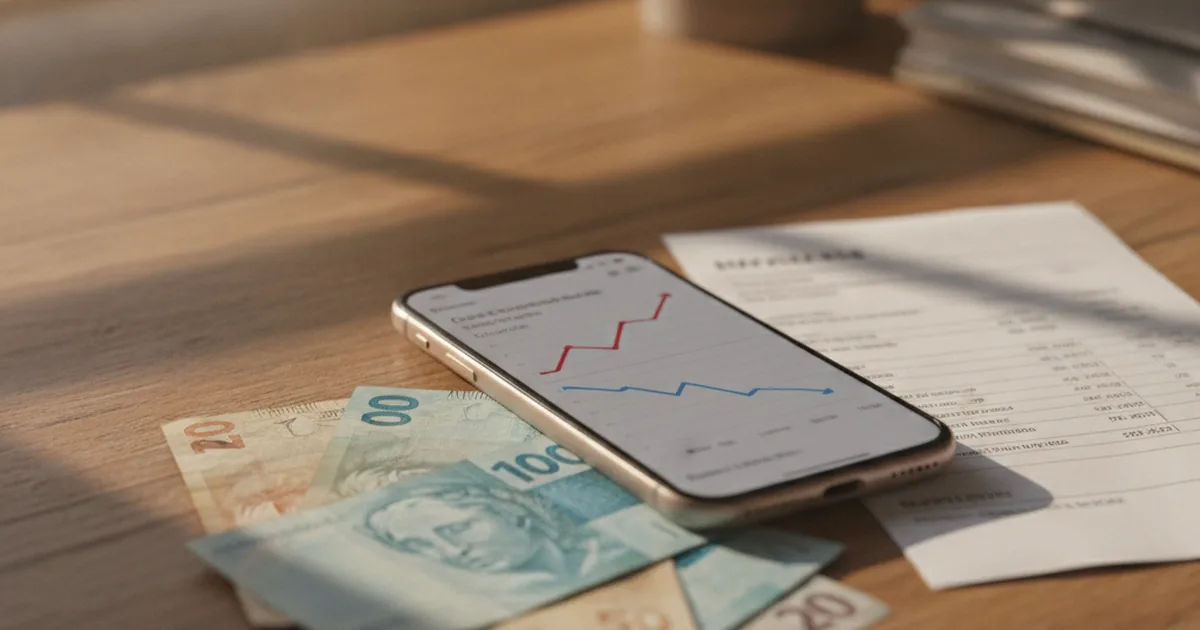
If you run paid traffic, you probably got a shock with your first Meta Ads invoice in January 2026. The same budget as always suddenly delivered less, and a new tax line appeared that wasn’t there before. This wasn’t a billing error, and your target audience didn’t get more expensive: what changed was who pays the tax on the ad.
Since January 1, 2026, Meta stopped absorbing PIS/COFINS and ISS on ad placements in Brazil and started passing this cost directly to advertisers—a pass-through of about 12.15% on the invoice amount for accounts billed in Brazilian reais. This is the infamous "invisible tax" on Meta Ads that went viral at the end of 2025. This guide explains exactly what changed, how much it impacts your budget, and what real solutions exist—without the easy promise of "just open a company abroad and dodge the tax," which is often a trap.
What exactly changed in January 2026
Until 2025, some taxes levied on digital ad placements were absorbed by Meta itself and didn’t appear on your invoice. You saw the media value, paid that amount, and the tax was hidden in the platform’s backend operations.
Starting January 1, 2026, this logic flipped. Meta began itemizing and passing on PIS/COFINS and ISS directly on the invoice for Brazilian advertisers. The ad auction value remains the same, but now there’s a tax layer on top that used to be hidden.
In practice, to achieve the same reach as before, you now pay about R$1,138 for every R$1,000 in media: since these taxes are calculated "inside" (grossed up), based on the total invoice including tax, the effective increase exceeds 13%. The money that actually turns into ads is what’s left after taxes.
Where does the ~12.15% come from?
This pass-through isn’t a brand-new tax. These are existing taxes on services, now made visible on your bill:
- PIS/COFINS: Federal contributions totaling 9.25%, levied on service revenue.
- ISS: Municipal tax on services. Digital ad placement is considered a service, and the rate is around 2.9% (varies from 2% to 5% depending on the municipality).
Combined, PIS/COFINS and ISS reach approximately 12.15%, which is the figure that appears on most invoices and communications. That’s why many people round it up to "the 13% Meta Ads tax."
In addition to this pass-through, Meta also started displaying two lines related to the Tax Reform: CBS (0.9%) and IBS (0.1%). In 2026, these appear on the invoice for transparency, but have no financial impact during this transition phase. The real weight, for now, is the ~12.15% from PIS/COFINS and ISS.
How much does this really impact your budget?
The most honest way to understand the size of the problem is to look at the money leaving your account.
For a R$5,000 media budget, you now shell out about R$5,692 to keep the same R$5,000 running as ads. That’s R$692 per month that didn’t exist in your spreadsheet in 2025.
In prepaid setups, the effect is even more visible because the tax is deducted upfront. A deposit of R$1,000 releases about R$878.50 for ad delivery; the remaining R$121.50 is tax.
Annualize this. Someone investing R$10,000 per month now pays around R$16,600 more per year just in tax pass-through, without any campaign results improving. It’s a cost that eats into the margins of agencies, affiliates, and any business entity relying on paid traffic.
One important detail changes the size of the hit depending on your tax regime:
- Lucro Real (Actual Profit): part of the PIS/COFINS can become a tax credit and be offset. The net cost tends to be lower than the full 12.15%.
- Simples Nacional: usually there’s no credit to offset, so the company typically bears the full pass-through.
Which of these applies to you is exactly the kind of question your accountant can answer better than any article. Confirm your tax classification before reorganizing your operation.
Meta got more expensive, but Google didn’t. Why?
Let’s clear up a common misconception. Many assumed that Google Ads and Meta Ads would see the same cost change in 2026. That’s not what happened.
Google chose to keep ad prices unchanged and only itemize the taxes on the invoice for transparency, without passing on any extra cost to advertisers. Meta chose to pass on PIS/COFINS and ISS as an additional cost. In other words: delivering the same media on Meta is now almost 14% more expensive, while on Google the media price stayed the same, with taxes just itemized.
When comparing platforms or reallocating budgets between them in 2026, this difference matters. It’s not that "ads got more expensive" in general; it was Meta, specifically, that started charging the pass-through.
The real solutions (and what to check for each one)
There’s no magic button to eliminate the tax. There are three paths advertisers are taking, each with its own trade-offs:
- Adjust your budget and pricing. The most straightforward: incorporate the pass-through into your operating costs, at the correct rate—about 13.8% on the media value—and, when appropriate, pass it on to the end client. This doesn’t eliminate the tax, but prevents your delivery from plummeting due to budget cuts.
- Review your media structure. Consolidate campaigns, improve creatives and CPA, and reallocate part of the budget to channels that didn’t have the pass-through (like Google). This can offset much of the increase without touching the tax itself.
- Switch your ad account billing to USD. The PIS/COFINS and ISS pass-through applies to billing in reais by Meta’s Brazilian entity. Accounts billed in USD change the nature of the charge, but bring up another question: how to pay in dollars without stacking more taxes on the payment layer.
It’s in this third path that a cost almost nobody audits comes into play: the card cost.
Switching to USD swaps one cost for another (and one can be minimized)
If you bill your ad account in USD, you need to pay that invoice in dollars. And your choice of card determines how much you lose in conversion:
- Brazilian credit card: stacks 3.5% IOF (the rate in effect in 2026, on international purchases) plus the issuer’s spread, which is usually around 4% to 5%. You’re swapping the media tax pass-through for a currency conversion cost of almost the same size.
- Digital dollar card, like Picnic’s: when your balance is already in dollars and the charge is in dollars, there’s no conversion or IOF in Picnic’s standard process, and the Picnic fee is 0% on USD purchases. The 0.3%-0.5% provider cost in Picnic’s official fee table applies when funding from BRL via Pix, not to the USD purchase itself. Visa’s conversion margin applies to purchases in currencies other than USD, not to a USD charge against a USD balance. Other funding routes have their own costs. Note: not every fintech dollar card in Brazil works this way; if the balance is loaded in reais, the 3.5% IOF usually applies at the time of loading.
The difference is significant, especially because ad spend is recurring. For an account spending the equivalent of US$3,000 per month in dollars, paying with a Brazilian credit card with 3.5% IOF plus ~4.5% spread means about US$240 per month just in payment layer costs (illustrative calculation: US$3,000 × 8% = US$240). By contrast, with the Picnic card, there is 0% Picnic fee on USD purchases from an existing USD balance. If you fund that balance from BRL via Pix, the 0.3%-0.5% provider cost applies at funding: at an illustrative 0.5%, that is equivalent to US$15 on US$3,000 funded, not an extra fee on the ad invoice. The full comparison between card options is in which card to use to pay Meta Ads. If you want to understand IOF in detail, see what is IOF, and for how the spread works, what is currency spread.
To be clear: switching your account to USD doesn’t make the tax on your company’s revenue disappear, and it changes how invoices and PIS/COFINS credits are handled. It’s a way to reduce the currency conversion and IOF cost in the payment layer, not a way to stop paying taxes on your revenue. So, again: align with your accountant before changing your billing setup.
What DOESN’T work: the LLC trap
Whenever a new tax appears, so do those selling shortcuts: "open an LLC in the US and dodge the Meta Ads tax." In practice, for most people just looking to reduce media costs, this is a trap.
A company abroad comes with setup and maintenance costs, compliance obligations both in Brazil and overseas, and the risk of tax reclassification if your real operation remains Brazilian. It’s a heavy structure for a problem that, at its core, is about the payment layer of your media spend.
The key point is this: you don’t need an LLC to pay a USD ad account without stacking IOF and spread. A dollar card solves the currency and IOF issue without setting up any foreign company. What an LLC promises to solve (the tax on your revenue) is a much more serious matter, and not something to decide over a media fee. If that’s your case, it’s a conversation for your accountant and lawyer, not a paid traffic blog post.
Where Picnic fits in
Picnic doesn’t change Meta’s tax rules and isn’t a way to escape taxes on revenue. Where it does help is in the slice you can actually reduce: payment in dollars.
With the Picnic card and a digital dollar balance, an ad account billed in dollars is paid with 0% IOF and 0% Picnic fee on the dollar purchase, and no annual fee. As per Picnic’s official fee table, funding from BRL via Pix incurs a provider cost of 0.3%-0.5% over the onchain quote. That funding cost is separate from the USD purchase; other funding routes have their own costs. The same logic applies to any recurring international expense for a business, like subscriptions and tools; the guide on how to pay international suppliers covers this in detail. The idea is simple: remove the currency conversion and IOF layer, without needing an offshore structure.
Note: As of September 22, 2026, new Picnic card orders are temporarily paused. Existing cards continue to work until December 20, 2026, 23:59 UTC. For more details, see Picnic’s official announcement.
Conclusion
What changed in 2026 is straightforward to sum up:
- Since January 1, 2026, Meta has been passing on ~12.15% in PIS/COFINS (9.25%) and ISS (~2.9%) to advertisers on accounts billed in reais. The auction didn’t get more expensive; the tax that used to be absorbed now appears on your invoice.
- Google did not make the same pass-through; it kept prices the same and only itemizes the taxes.
- Your tax regime matters: Lucro Real may allow you to credit part of the tax, Simples Nacional usually bears the full amount.
- Switching billing to USD swaps the media tax for the currency conversion question, and that part can be minimized with a dollar card; you don’t need an LLC for this.
Before reorganizing your operation, confirm your classification with your accountant; tax regime and invoicing change the calculation. Then, look at the layer almost nobody reviews: if you already pay for media or tools in dollars, review your payment method to ensure you’re not losing unnecessarily to IOF and spread. For a detailed comparison of card options and how to optimize this layer, see our guide to cards for Meta Ads.
Picnic is a technology platform that lets users independently interact with USDC, a U.S. dollar-pegged stablecoin issued by Circle, on public blockchains. USDC is not legal tender in Brazil.
Displayed exchange rates vary with market conditions. The final applicable amount is the one shown on the transaction confirmation screen. Cryptoassets involve risks, including volatility and loss of peg.
Picnic does not custody user assets and is neither a financial institution nor a virtual asset service provider. Sending and receiving U.S. dollar payments through a U.S. account is offered in partnership with Noah Savings Inc. Terms and conditions apply.
Information verified in April 2026.

Picnic team
Technology platform
The Picnic team creates content about international finance, cards and digital dollars.
Get your Picnic card
No annual fee, no IOF and no Picnic fee. Open your account in five minutes.
Open your account →