
EES in Europe: biometrics and connection times
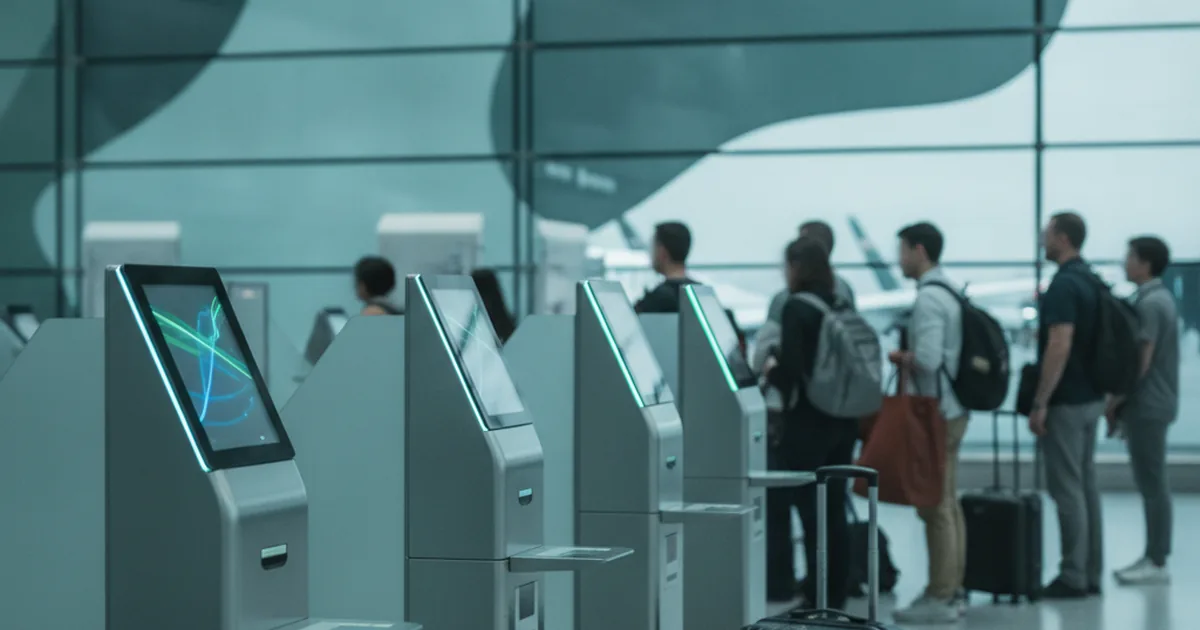
A connection that looked generous can become tight if immigration takes place at your connecting airport rather than your final destination. Since April 10, 2026, EES in Europe has been fully operational, digitally recording entries and exits at the external borders of 29 countries, with a facial image and fingerprints where applicable.
For travelers leaving Brazil, the practical rule is simple: EES registration happens where you actually enter the Schengen Area; biometric collection follows the procedure and local operations. On a Brazil → Paris → Rome itinerary, border checks take place in Paris. On an international connection in Madrid on the way to the United States, if you stay in the international transit area, changing planes alone does not mean entering Schengen.
There is no safe connection time that suits every airport. The terminal, time of day, baggage arrangements, single-ticket protection and first biometric registration all affect the risk. This guide, checked on November 11, 2026, explains how to identify the border crossing in your itinerary and build a buffer without treating estimates as guarantees.
EES in Europe: quick answers
| Question | Answer as of November 11, 2026 |
|---|---|
| Is EES operating? | Yes. It became fully operational on April 10, 2026 |
| Who is registered? | Non-EU visitors on short stays, including Brazilians, subject to exceptions |
| Must you complete a form beforehand? | No mandatory advance EES application. It is a border procedure, not a travel authorization |
| Is there a fee? | There is no EES registration fee |
| What information is collected? | Passport details, entry and exit data, a facial image and fingerprints where applicable |
| Where does it happen on a connection? | At the first point where you cross an external border and enter Schengen |
| Are children registered? | Yes. Children under 12 do not provide fingerprints |
| Is it the same as ETIAS? | No. EES records border crossings; ETIAS is a separate pre-travel authorization system |
| How much connection time should you allow? | It depends on the airport and ticket; use this guide's matrix for planning, not as a guarantee |
The European Commission confirms that the system replaces manual passport stamping for travelers in scope in participating countries. Border authorities still decide whether to admit you. A digital record does not remove the interview, document checks or entry conditions.
What is EES, and who needs biometrics?
EES stands for Entry/Exit System. It is an automated record for non-EU nationals crossing the external borders of participating countries for a short stay, normally up to 90 days in any 180-day period.
The system began rolling out on October 12, 2025 and became fully operational on April 10, 2026. It records:
- name, date of birth, nationality and travel-document information;
- the date and location of each entry and exit;
- any refusal of entry;
- a facial image captured live;
- fingerprints where required.
Brazilians making short visits normally fall within its scope even when they do not need a Schengen visa. Exceptions cover categories such as EU, European Economic Area and Swiss nationals, certain residence-document holders and specific family situations. If you legally live in Europe or have more than one nationality, check the status of the document you intend to present.
Which countries use EES?
EES operates in 29 countries: Austria, Belgium, Bulgaria, Croatia, Czechia, Denmark, Estonia, Finland, France, Germany, Greece, Hungary, Iceland, Italy, Latvia, Liechtenstein, Lithuania, Luxembourg, Malta, the Netherlands, Norway, Poland, Portugal, Romania, Slovakia, Slovenia, Spain, Sweden and Switzerland.
The official EES list highlights two important distinctions: Ireland and Cyprus are EU members but do not use EES. Passport stamping continues under their applicable border procedures.
That also explains why “arriving in Europe” is an unhelpful shortcut. The procedure depends on the border and country involved, not just the continent on your ticket.
What happens on your first EES entry?
The first time you cross an EES border, an officer or self-service equipment reads your passport and creates your digital file. The official process explanation describes the standard procedure: a facial photograph and fingerprint scan where applicable. The actual collection process can vary with local operations. You may still be directed to an immigration desk.
On later trips, authorities compare you with the existing file. That can reduce the registration step, but does not make every subsequent entry instantaneous. Queues, availability of automated gates, passport checks and officers' questions still vary.
Bring your passport in good condition and follow the airport's instructions. EES can process biometric and non-biometric passports, though automated equipment and local facilities may require a chip passport.
Are children registered too?
Yes. Children are not outside EES simply because of their age. The official EES FAQ confirms that children under 12 do not provide fingerprints; the governing framework is Regulation (EU) 2017/2226.
Their document details and facial image can still be recorded. A family should therefore allow for the entire group's processing during a connection, even when younger children do not have their fingerprints scanned.
Where does EES happen when you connect in Europe?
The decisive point is the first external Schengen border you cross. The destination on your final boarding pass may not be where immigration takes place.
Brazil → Paris → Rome
You arrive in France from outside Schengen and then take a flight between two participating countries. Entry checks, immigration and EES happen in Paris. Paris → Rome is an internal Schengen flight.
This is a connection that needs particular attention: you must disembark, reach passport control, complete EES and get to the next gate. If you change terminals, add that journey to the calculation.
Brazil → Lisbon → London
Portugal uses EES, but the United Kingdom is outside Schengen. If the airport and airline let you remain in the international transit area until the London flight, you may not enter Portugal or have an EES entry recorded during the connection.
You cannot establish this from the airport's name alone. Collecting baggage, changing terminals using a landside route or traveling on separate tickets can require crossing the Portuguese border. Confirm the route with your airline and airport.
For the British part of your itinerary, also check the UK ETA rules for Brazilians.
Brazil → Madrid → New York
On a connection entirely within the international transit area between two non-Schengen flights, you do not enter Spain simply because the plane lands in Madrid. Without crossing passport control, there is no EES entry registration.
Again, the exception is an itinerary that requires leaving the international area. Baggage not checked through, an airport change or a self-connection can alter your route.
How much connection time should you allow for EES?
There is no official, universal number. Conditions can change throughout the day. Schiphol Airport's arrival guidance warns that passport control can become busier when several flights arrive together and directs travelers to current conditions.
On the first day of full operation, the airport association ACI Europe reported queues of two to three hours at some border controls during peaks. That is an operational warning from April 10, not a prediction for every airport or a typical waiting time in November.
Use this editorial planning matrix as a starting point, not an airport or airline standard:
| Connection type | Conservative range to consider | What can use up the buffer |
|---|---|---|
| Single ticket, same terminal, first Schengen entry | 2.5–3 hours | Disembarking, queues, first registration and walking to the gate |
| First entry with a terminal change or anticipated peak | 3–4 hours | Internal transport, extra security and concentrated arrivals |
| Separate tickets, or baggage to collect and recheck | 4 hours or more | Immigration, baggage reclaim, customs, check-in and security |
| Two non-Schengen flights, entirely airside | Airport or airline minimum plus a normal buffer | Distances, transfer security and inbound delays; EES does not add an entry |
These ranges do not guarantee you will catch your next flight. They are a cautious way to compare options while you lack itinerary-specific information. A compact airport outside peak hours can be much quicker; a large hub with distant terminals can need more time even without unusual queues.
Is the airline's minimum connection time enough?
A minimum connection time means the airline accepts selling that combination under its expected operating conditions. It does not promise a relaxed transfer or reflect your personal tolerance for risk.
Before choosing a short connection, answer these questions:
- Are both flights on the same booking?
- Is your baggage tagged through to the final destination?
- Will immigration happen at this airport?
- Is this your first EES biometric registration?
- Is there a terminal change, internal train or additional security check?
- Does the airport publish a peak-time warning for your arrival?
- If you miss the connection, what rebooking assistance does your ticket provide, and what would be at your expense?
With a single ticket, missed connections are normally handled within the airline's conditions of carriage, although the solution and timing depend on the circumstances. Separate bookings create much greater risk. A cheap fare may stop being a saving if you must buy another flight and a hotel night.
If you are checking baggage, also know what to do about lost luggage on an international flight.
Can you start registration before arriving?
The official Travel to Europe app allows biometric-passport holders to pre-register some information within 72 hours before crossing, but use is optional and availability is country-specific. The official app information lists Sweden for passport data, a facial image and the entry questionnaire, and Portugal for the questionnaire. Check the participating country and border point again before traveling; support can expand or change.
The app does not replace the border check or remove any in-person collection or verification still required. Do not download a similarly named app without checking the developer and official link.
To reduce friction:
- check whether your first-entry country supports the app and which functions it accepts;
- keep your passport handy, not at the bottom of your bag;
- have your boarding pass and accommodation address accessible;
- install an international SIM or travel eSIM before depending on airport internet;
- consult the airport app or website on your travel day.
How long is your information kept?
The EES data page explains the stored information. For the legal retention rules, Article 34 of Regulation (EU) 2017/2226 provides these general periods:
- entry/exit records: three years from the recorded exit; refusal-of-entry records: three years from the refusal;
- the individual personal-data file and linked records: three years and one day from the last exit or refusal, if no further entry is recorded within three years;
- if no exit is recorded: five years from the end of the authorized stay.
Specific rules apply to some family-member categories. Travelers can request access to their data and ask for correction, completion or deletion where processing is inaccurate or unlawful. Direct the request to the competent authority in a country using EES, preferably one connected with your trip.
If an exit is missing, keep evidence of your journey and contact the relevant authority. A missing record can affect the calculation of your permitted stay and should not be ignored.
Are EES and ETIAS the same thing?
No. The distinction is straightforward:
- EES: entry and exit registration at the border, already operational, using passport details and biometrics;
- ETIAS: a separate electronic pre-travel authorization for visa-exempt nationals, not operational at the time of this check.
On November 11, 2026, the Council of the EU's current information states that ETIAS is not yet operating, applications are not being accepted and the EU will announce the launch date in advance. Do not treat an earlier forecast for the last quarter of 2026 as a confirmed start date or pay a third party claiming to issue an authorization that is not yet available.
Check the official ETIAS portal before a future trip; the ETIAS guide for Brazilians provides broader background. EES and ETIAS can coexist: an advance authorization will not replace biometric checks at the border.
Checklist before booking a European connection
Check the actual direction of your itinerary, not just the destination country:
- identify the first airport where you enter Schengen;
- confirm with the airline whether the connection stays airside or requires immigration;
- check whether the flights are on the same booking;
- confirm that baggage is checked through;
- research terminal changes and walking or transfer times;
- check airport notices for your date and arrival time;
- add a buffer for first biometric registration;
- favor a longer layover on separate tickets;
- check passport validity, entry requirements and ETIAS when it begins operating;
- plan how to pay in Europe without dynamic currency conversion.
EES does not make every connection lengthy, but changes where to look for risk. First identify the border, then add immigration, terminal transfers, baggage and your ticket's protection. That itinerary-specific calculation is worth more than a universal rule that “two hours is enough.”
Picnic is a technology platform that lets users independently interact with USDC, a U.S. dollar-pegged stablecoin issued by Circle, on public blockchains. USDC is not legal tender in Brazil.
Displayed exchange rates vary with market conditions. The final applicable amount is the one shown on the transaction confirmation screen. Cryptoassets involve risks, including volatility and loss of peg.
Picnic does not custody user assets and is neither a financial institution nor a virtual asset service provider. Sending and receiving U.S. dollar payments through a U.S. account is offered in partnership with Noah Savings Inc. Terms and conditions apply.
Information verified in November 2026.

Picnic team
Technology platform
The Picnic team creates content about international finance, cards and digital dollars.
Get your Picnic card
No annual fee, no IOF and no Picnic fee. Open your account in five minutes.
Open your account →