
Is it better to keep crypto on an exchange or in your own wallet?
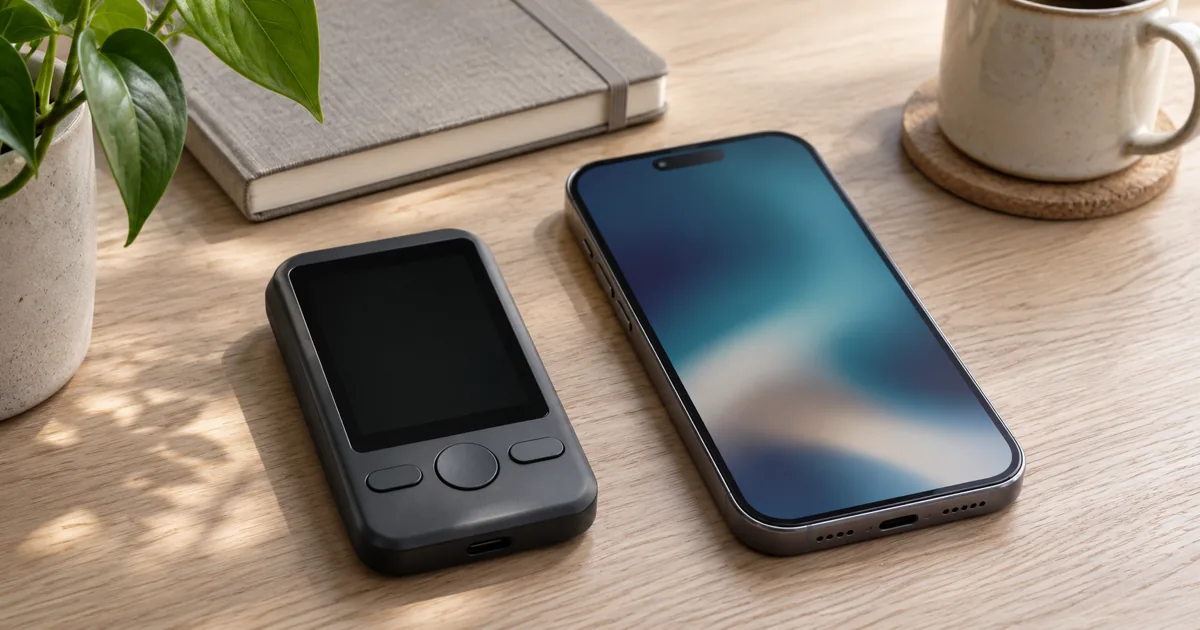
Your own wallet gives you control over transfers; Picnic offers self-custody through a passkey, without a seed phrase to write down, and the company cannot move your balance. An exchange can make sense for frequent trading, while a personal wallet means taking responsibility for access and testing how recovery works.
If you buy crypto to trade soon, make frequent conversions or are still learning to protect keys, keeping an operational balance with a well-run exchange may be more practical. If you want to hold for longer, use onchain applications, which operate directly on a blockchain, or reduce dependence on a company, self-custody becomes more relevant.
The useful answer is not “withdraw everything.” Nor is it “leave everything where you bought it.” One possible arrangement gives each balance a job: trading funds on an exchange, with a separate wallet for holdings you want to control yourself.
Quick answer: crypto exchange or your own wallet?
- An exchange may suit an operational balance: crypto you plan to trade, convert or withdraw soon.
- Your own wallet may suit longer-term holdings: assets you do not want to leave dependent on a custodian.
- You can use both for different purposes: suitability depends on the risks, costs and responsibilities you can manage.
A wallet does not store coins as a physical safe would. It stores, or helps you use, the keys that authorize operations on blockchain records. With a custodial exchange, the institution normally manages those keys. In self-custody, you control the authorization mechanism. The Investor.gov custody guide explains this distinction.
If that difference is still unclear, start with what self-custody means.
Exchange, hardware wallet and passkey wallet compared
Comparison checked on November 20, 2026. Ledger and Trezor represent hardware wallets, physical devices that protect signing keys. They are not exchanges, or direct substitutes for every feature of an everyday account.
| Factor | Custodial exchange | Hardware wallet, such as Ledger or Trezor | Passkey wallet, such as Picnic |
|---|---|---|---|
| Who controls transfers | The institution manages keys and processes your requests | You authorize with the device and protect its backup | In the Picnic Account, you authorize with the passkey for your Safe smart wallet |
| Withdrawal interruptions | Outages, platform controls or insolvency can prevent withdrawals | No exchange release is required; networks and software still matter | Authorization does not depend on Picnic holding custody; the interface, network or services used for an operation can still fail |
| Losing access | Lost credentials; recovery follows the institution's rules | Losing the device and a valid backup can prevent recovery | Losing the passkey and recovery methods can prevent access |
| Recovery | Account, email and identity checks | The backup method used by the model, often a seed phrase | With Picnic, a synced passkey when available; otherwise registered-email recovery with a minimum seven-day protection period |
| Main practical strength | Frequent orders and trading with fewer transfers | Key isolation for someone able to manage a device and backup | Authorizing on your phone, without writing down a seed phrase in Picnic's passkey flow |
| Costs to compare | Trading, spread, withdrawal and network costs | Device purchase, network fees and services used | With Picnic, each conversion fee and network or bridge costs appear before confirmation |
No column is safe by definition. Ledger's wallet-versus-exchange explanation focuses on who controls keys; Trezor explains hardware key isolation. Protecting keys does not stop you from approving a transfer to the wrong recipient or exposing a backup.
FTX illustrates custody risk, not a prediction about every exchange. The U.S. Trustee Program report records its Chapter 11 bankruptcy filing in November 2022. When a custodian becomes insolvent, accessing assets can depend on legal proceedings.
For long-term holdings, a hardware wallet may be appropriate if you can protect and test its backup. For frequent trading, an exchange may be more convenient. A passkey wallet serves another need: control in everyday use through a more familiar access method.
When keeping crypto on an exchange may make sense
Exchanges simplify buying, selling and trading. Depending on what you need, that convenience can justify using third-party custody for part of your holdings.
You trade frequently
Keeping the amount needed for orders and short-term conversions on an exchange avoids repeated transfers. Moving assets back and forth can add network fees and opportunities for error.
That does not mean your entire portfolio needs to be there. It means the operational balance is where you expect to use it.
You do not yet understand wallet recovery
Self-custody requires a plan that works when something goes wrong. If you cannot explain what happens after a lost phone, forgotten password or damaged device, moving everything immediately can replace institutional risk with a larger operational risk.
A limited balance with an institution you have assessed may be an interim option while you learn and test a wallet with a small amount.
The balance is small and temporary
For a purchase you will use soon, another wallet's complexity may not bring a proportional benefit. Small amounts still matter; the point is to match the security arrangement to the financial impact and duration of the exposure.
The exchange is a bridge, not the final destination
You can buy through an exchange, wait for the transaction to settle, then withdraw the portion intended for longer-term holding. That separates the convenience of trading from the question of who controls the keys afterward.
When your own wallet may make more sense
Self-custody is not just an ideological choice. It can address needs an exchange account does not meet, provided you can handle the responsibilities.
Access matters beyond the next trade
When losing access would change your financial plans, dependence on one institution becomes important. A personal wallet lets you authorize transfers without asking a custodial exchange to release them.
That does not make crypto an appropriate emergency reserve. Price volatility, liquidity and the possibility of loss still matter.
If a wallet uses a seed phrase, the list of words used to recover its keys, exposing that phrase puts assets at risk. Losing only the backup is different from losing every access method: while the wallet remains accessible, you may still be able to transfer to a new wallet. Trezor's lost-backup guidance makes that distinction. If all valid access and recovery methods are gone, support cannot simply recreate the keys.
You want to use onchain applications
Blockchain lending, liquidity pools, staking and other applications need a compatible wallet. Staking uses assets to participate in a network's validation mechanism. Keeping assets on an exchange limits you to the integrations it offers.
Before connecting a wallet, check the domain, network, permissions and exact action you are approving. A confirmed blockchain transaction normally cannot be undone.
You want less dependence on a custodian
An institution holding the keys adds dependence on its controls, solvency and availability. An attack, outage, freeze or insolvency can interrupt withdrawals.
Self-custody reduces that particular dependency. It does not remove market risk, scams, malicious contracts, software failures or human error. It is also not secrecy: public-network transactions can be observed, and Picnic has operational visibility into balances.
You want to separate everyday use from longer-term holdings
The Bitcoin security guide describes keeping smaller everyday balances separate from more strongly protected holdings. One possible arrangement uses a connected wallet for applications and a hardware wallet for a less frequently accessed balance.
A smart wallet is a programmable wallet whose authorization and recovery rules can differ from a traditional seed-based wallet. Understand those rules before deciding what to keep there.
Is there a minimum amount worth withdrawing?
There is no universal threshold. A rule such as “one month's salary” ignores income, experience and what the balance is for.
Instead, ask:
- Would six months without access disrupt my plans?
- Can I explain exactly how I would recover the destination wallet?
- Have I tested a small transfer in both directions?
- Are the withdrawal costs and operational work proportionate to the balance?
If the first answer is yes and the others are no, the priority is preparation, not a rushed withdrawal. Understand and test the destination before moving the main balance.
Compare the exchange's withdrawal charge, the network fee and any conversion required. Several small transfers can cost more and create more chances for mistakes than a planned migration. A test transfer still has a purpose: validating the route before committing a larger amount.
A hybrid arrangement: three balances with different jobs
Rather than picking one universal winner, you can separate funds by purpose. The amounts depend on your needs and ability to operate each setup.
Trading balance
This stays on the exchange for orders, short-term conversions and planned withdrawals. It need not include holdings unrelated to those activities.
Application balance
This stays in a wallet connected to applications. Frequent signing and contract interactions create exposure, so this wallet does not need to hold everything you own.
Longer-term holdings
These use a setup with less routine exposure, such as a hardware wallet or another self-custody arrangement whose recovery rules you understand. A recovery feature does not make a connected wallet equivalent to offline key storage.
The point is to avoid concentrating everything either in an exchange's custody risk or in the signatures you make every day. If an exchange has already interrupted withdrawals, see what to check when an exchange is hacked or pauses withdrawals.
Checklist for assessing an exchange
Before leaving assets in custody, check:
- The company and jurisdiction: legal entity, terms and official support channels.
- Asset protection: storage arrangements, segregation and withdrawal controls.
- Permitted uses of your assets: whether lending, reuse or commingling is allowed.
- Full costs: trading, spread, withdrawals and network fees.
- Withdrawal availability: supported networks, limits and security checks.
- Account recovery: authentication, email changes and protection after a device change.
A polished interface does not establish financial safety. Do not assume insurance or deposit-style protection without reading the coverage and exclusions.
Checklist for using your own wallet
Before moving the main balance:
- Make a small transfer and confirm receipt.
- Match the asset, network and contract to what the destination actually accepts.
- Understand recovery before depositing.
- Never share a seed phrase, recovery code or private key.
- Protect backups against loss and unauthorized access.
- Bookmark official applications and treat unsolicited links with caution.
- Read transaction details and permissions before approving. Ethereum's security guide explains the risks of irreversible transfers and malicious approvals.
- Plan how access would work in an emergency, where the wallet's design allows it.
If writing down words is your main concern, read the seedless self-custody wallet comparison. A different access method still needs a recovery plan.
Where Picnic fits
Picnic is a technology platform, not a bank or exchange. You maintain control of your assets: the company cannot move your balance, and it is not covered by Brazil's FGC deposit guarantee. The Picnic Account uses a Safe smart wallet. In the passkey flow, a cryptographic credential authorizes operations through a check such as your phone's biometrics. Older accounts may use another access method; check what is active before planning recovery.
Picnic combines Pix funding and withdrawals with crypto purchases, sales and conversions. Pix is Brazil's instant payment system. This can reduce the friction of using a personal wallet without starting with a traditional seed phrase. You still need to understand recovery, networks, signatures and costs.
The official Picnic fee table, in Portuguese, checked on November 20, 2026, lists a 0% Picnic fee for receiving crypto into the Picnic Account; the sender pays the network fee. That is not a claim that buying, converting, bridging or withdrawing on every network has no cost. Check the full operation before confirming.
A synced passkey may remain available when you change phones. If it is unavailable, recovery through the registered email includes a minimum seven-day protection period and must then be completed. This is not instant recovery or a blanket resolution time for login problems. The Picnic recovery guide, in Portuguese, was checked on November 20, 2026.
Start with an amount suitable for a test, make a transaction, and understand how you would access and recover the account before increasing the balance.
Frequently asked questions
Is it dangerous to leave crypto on an exchange?
There is counterparty risk: the institution manages the keys and can experience an attack, outage, restriction or insolvency. That does not make every exchange unsuitable. Assess the company and the purpose of the balance rather than assuming size or popularity guarantees safety.
Is your own wallet always safer?
No. It reduces reliance on a custodian while increasing your responsibility. Poorly protected access, a lost backup or a malicious signature can cause losses too.
Do I need a hardware wallet?
Not for every use. It can help keep signing keys offline for longer-term holdings. A phone-based or smart wallet may suit other needs if you understand its security and recovery model.
Who controls my crypto with Picnic?
In the Picnic Account's passkey flow, you authorize operations on your Safe self-custody wallet; Picnic cannot move your balance. You remain responsible for protecting access, and the balance is not covered by Brazil's FGC deposit guarantee.
What is a sensible first step for a beginner?
Learn with a small amount before choosing a larger allocation. An exchange can be an entry point, and a tested personal wallet can be the next step. Do not move the entire balance before understanding recovery.
Decide without moving everything at once
Exchanges and personal wallets solve different problems. Exchanges prioritize trading convenience; personal wallets prioritize control and direct access to compatible applications.
A possible arrangement separates trading, application use and longer-term holdings. The right combination depends on costs, risks and responsibilities you can manage. Small tests help validate the process before a larger transfer.
If that model fits your needs, explore the Picnic account and understand recovery before moving the main balance. For the distinction between wallet software and custody, see why Picnic is not an exchange.
Picnic is a technology platform that lets users independently interact with USDC, a U.S. dollar-pegged stablecoin issued by Circle, on public blockchains. USDC is not legal tender in Brazil.
Displayed exchange rates vary with market conditions. The final applicable amount is the one shown on the transaction confirmation screen. Cryptoassets involve risks, including volatility and loss of peg.
Picnic does not custody user assets and is neither a financial institution nor a virtual asset service provider. Sending and receiving U.S. dollar payments through a U.S. account is offered in partnership with Noah Savings Inc. Terms and conditions apply.
Information verified in November 20, 2026.

Picnic team
Technology platform
The Picnic team creates content about international finance, cards and digital dollars.
Get your Picnic card
No annual fee, no IOF and no Picnic fee. Open your account in five minutes.
Open your account →