
Card for Brazilians Living in the US: How to Pay for Everyday Life Without a US Bank Account [2026]
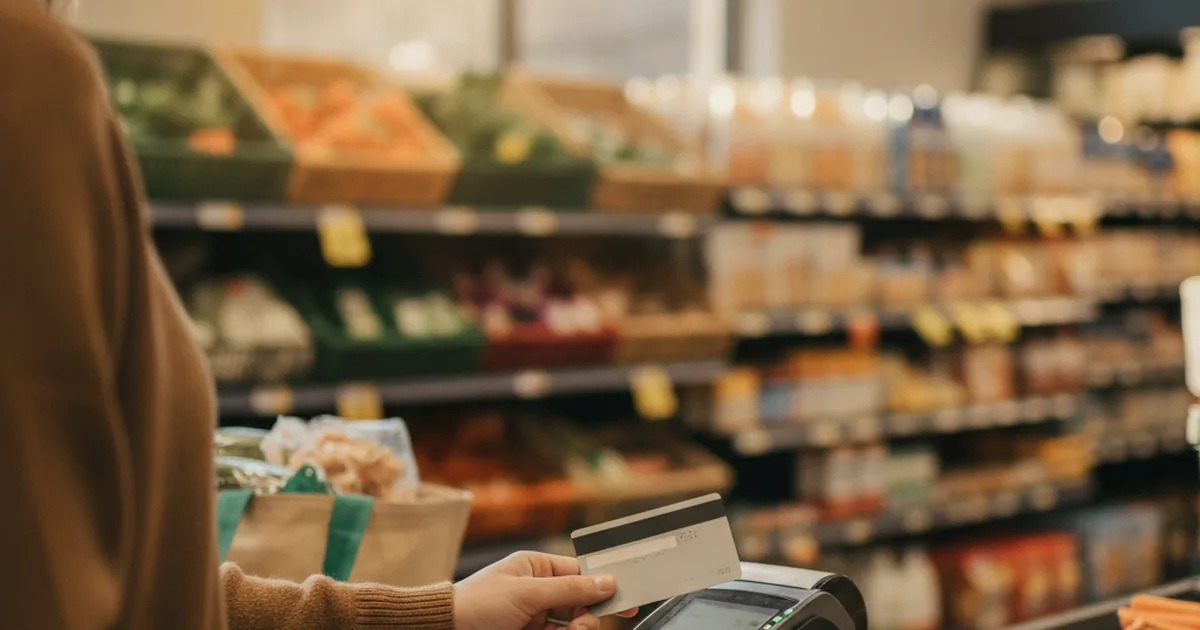
You land in the United States, rent a place, and need to buy groceries, pay for transportation and sign up for a phone plan. You quickly find out that a US bank account doesn't come through on day one, and often not in the first month either. Without a Social Security Number and without a credit history, you are in limbo: you already live there, but you don't yet have a local payment method that really works.
The gap between arriving and finally having an account and card from a US bank can last months. And it is precisely in those first months that Brazilian newcomers pay the most, because they end up using their Brazilian credit card for everything, with IOF (Brazil's tax on financial operations) and the issuer's exchange spread built into every purchase.
This guide explains, without sugarcoating, why a US bank account takes time, what you can sort out right away, and how a dollar card that doesn't depend on an SSN can cover everyday spending while your local banking life gets organized. Where the answer depends on your situation, the text says exactly what it depends on.
Why a US bank account (and card) doesn't come through right away
First, because there are a lot of half-truths about this: it is not impossible to open a US bank account without an SSN. According to Bankrate (checked in November 2026), large banks such as Bank of America, PNC, Chase and Citibank accept an ITIN (the IRS tax number for people who aren't eligible for an SSN) in place of a Social Security number when you open an account at a branch. Chase itself says an ITIN may be used as a substitute for an SSN on an application if the bank requires one. Some smaller institutions and credit unions go further and open accounts with no SSN or ITIN at all, with their own conditions.
The problem isn't impossibility. It's friction and time.
- According to Bankrate, most banks' online account-opening systems can't process an application without an SSN, so you will almost certainly need to go to a branch in person.
- An ITIN is not something you get just to open a bank account. The IRS issues it only to people who have a federal tax purpose (such as filing a return) and are not eligible for an SSN, and the IRS says to allow about 7 weeks for processing, or 9 to 11 weeks during tax season or if you apply from abroad. If your visa or status makes you eligible for an SSN, that is the number to get instead.
- Many banks ask for proof of a US address in your name, which you may not have in your first weeks.
The card is a separate story. The card that comes with a new account is usually a debit card, not a credit card. To get a real US credit card, you need a credit score. FICO, for example, needs at least one account that has been open for six months or more before it can generate a score at all, according to myFICO; a score strong enough for mainstream cards usually takes longer, with on-time payments. A common starting point is a secured card: a real credit card backed by a cash deposit that becomes your limit, which the issuer typically reports to the credit bureaus (unlike a prepaid card).
In short: you can open an account, but it's slow and bureaucratic. And a local credit card, which is what most people want for daily life, depends on a history you will only have months from now. That is the real gap of the first months.
What you need to sort out right away
While the local banking side gets sorted, life doesn't stop. In your first weeks you will need to:
- Cover daily spending: groceries, pharmacy, transportation, restaurants, gas.
- Pay recurring services: phone plan, subscriptions, gym, streaming.
- Pay basic housing costs: many rents and bills accept a card or digital wallet, though some still require a direct debit from a US account (more on that below).
Most of this runs on card networks such as Visa and on Apple Pay and Google Pay, which are widely accepted in the United States. In other words, for most of what you spend in your first months, you don't strictly need a US bank account. You need a dollar card that works.
And this is where the Brazilian credit card becomes the most expensive option. Every purchase in the US on a Brazilian credit card carries 3.5% IOF plus the issuer's spread. With recurring spending, month after month, that adds up to a lot of money, unlike a short trip where the damage is a one-off.
The bridge: a dollar card that doesn't depend on an SSN
What solves the limbo of the first months is an international dollar card that doesn't depend on an SSN or a US credit history. Several providers offer cards that newcomers can use; check each one's fees, IOF treatment and eligibility. Below is how Picnic's version works, and what is available today.
Card availability: new Picnic card orders have been temporarily paused since September 22, 2026 (notice in Portuguese), with no confirmed date for reopening. Existing cards keep working normally until December 20, 2026, at 23:59 UTC; after that, cardholders continue on Gnosis Pay's new infrastructure through an upgrade in the app, which starts with the virtual card (the physical card has no confirmed date yet).
If you already have the Picnic card, it is an international Visa card in digital dollars (in Portuguese) with no annual fee, accepted in 180+ countries wherever Visa is accepted, including the United States. Picnic's card works with Apple Pay and Google Pay, and you can create virtual cards for subscriptions and online purchases without waiting for plastic to arrive by mail.
The cost difference is the central point:
- On dollar purchases, the Picnic card's total cost is 0%: zero IOF, zero Picnic spread, and Picnic absorbs the 1% Visa network fee. When you spend in dollars, there is no fee on the purchase.
- On purchases in other currencies, the cost is around 0.3%, which is the Visa network's own exchange margin, charged on every Visa card in the world. Even so, it is among the lowest costs available in Brazil.
- Loading the balance from reais is a separate step: there is no IOF and no Picnic margin on the conversion, but the rate currently includes the provider's cost of around 0.3% to 0.5%, shown in the app before you confirm.
Currently, no IOF applies on this path. BCB Resolution No. 521/2025 (from Brazil's Central Bank) classified certain digital-dollar operations as foreign-exchange operations; whether the 3.5% IOF will apply to card transactions of this kind still depends on complementary regulation.
Illustration: if you spend US$2,500 a month on daily life in the US with a Brazilian credit card, 3.5% IOF plus an issuer spread of 1% to 4% comes to roughly US$110 to US$190 a month, before any other charges. Over six months, before you have a local bank card, that is roughly US$675 to US$1,125. These are arithmetic examples, not quotes from a specific bank; check your own card's terms.
Picnic also lets you receive dollars with US bank details (via its partner Noah), subject to eligibility and account approval. That brings you closer to having a US account for the receiving side, though it is not a US checking account. If your dollar income comes from the United States, see also the guide on how to receive dollars while living in Brazil (in Portuguese), which explains this flow.
Picnic is a technology platform, not a bank, and it works on a self-custody model: you keep control of your assets.
What you can and can't pay with a dollar card
This is where honesty matters, because an international card doesn't replace everything a US bank account does. It's worth separating clearly:
| Situation | Dollar Visa card (such as Picnic's) | Needs a US bank account |
|---|---|---|
| Daily purchases (groceries, transportation, restaurants) | Yes, with the card or Apple/Google Pay | No |
| Subscriptions and online purchases | Yes, including with a virtual card | No |
| Receiving dollars from a US source | With Picnic, via US bank details through a partner, if eligible | No |
| Rent paid by card or through a platform | Yes, when the landlord accepts cards | Depends on the landlord |
| Bills that require automatic debit from a checking account (ACH) | No | Yes |
| Paper checks, some utilities paid by direct debit | No | Yes |
The right reading: a dollar card covers most of what you spend in your first months. What it does not do is replace a US checking account in cases that require automatic debit from an account (some rents, some electricity and water bills on autopay, payments by check). For those, a local bank is still necessary, which is why it is your final destination, not something to ignore.
How much this saves over the months
The difference between a tourist and a resident is recurrence. On a two-week trip, paying IOF and spread hurts once. Living in the US, you pay it on every purchase, every month, for months, until you have a local bank card.
To size it, remember Brazilian IOF. Under Decree No. 12,499/2025, in force since June 2025, international card purchases (credit, debit and prepaid), purchases of foreign cash and most transfers of funds abroad pay 3.5% IOF, and the earlier schedule that would have reduced this tax to 0% was revoked. On international credit card purchases, the issuer's spread comes on top. To understand how the tax works in each situation, read about what IOF is and about exchange spread (both in Portuguese).
On a card with 0% total cost on USD purchases, that weight disappears from the purchase itself. It's not a one-off travel saving: it compounds across the entire transition phase, the most expensive phase of a move. If your strategy includes keeping part of your savings outside the real, the same logic of dollarizing your wealth and building an emergency fund in dollars (both in Portuguese) connects directly to living in the US.
A fair comparison with tourists: if your case is a short trip and not a move, the reasoning changes, and the guide which is the best card to use in the US covers exactly that two-week scenario.
The path to a local account
A dollar card handles the first months, but the goal of anyone moving to the US is to get established financially there. The card is the bridge, not the destination. The path usually looks like this:
- Get the right tax number. If you are eligible for an SSN, apply for it. If you aren't, and you have a federal tax purpose, an ITIN can help: several banks accept it in place of an SSN, and some lenders use it to open credit.
- Open an account at an immigrant-friendly bank, in person, with your passport, a second ID if requested, your SSN or ITIN, and proof of address. Call the branch ahead to confirm what it accepts; some institutions are more flexible with newcomers than others.
- Start building a credit score, usually with a secured card, and keep payments on time. Expect at least six months before a FICO score can be generated, and longer before you have a history strong enough for mainstream cards.
While those steps mature, you don't have to put life on hold or overpay with your Brazilian credit card. If you already have the Picnic card, it covers recurring dollar spending with no fee on USD purchases, and once your local bank is up and running, you decide what makes sense to keep in each. If, besides spending, you also need to send money from Brazil to your new life in the US, the guide on how to send money from Brazil to the US (in Portuguese) compares the routes and shows where the 3.5% IOF applies.
Conclusion
Arriving to live in the US comes with a specific financial problem nobody warns you about: a US bank account and credit card take months, and in the meantime it's easy to burn money paying for everything with your Brazilian credit card.
Key takeaways:
- A US bank account is possible, but slow: several large banks accept an ITIN instead of an SSN, usually at a branch in person; an ITIN itself is only for people with a federal tax purpose, and a local credit card depends on a score that needs at least six months of history.
- Daily life doesn't have to wait: groceries, transportation, subscriptions and most bills run on card networks and Apple/Google Pay, which a dollar card that doesn't depend on an SSN can handle.
- The savings compound: 0% cost on dollar purchases, month after month, throughout the transition, matters far more than on a short trip.
- A local bank is the destination, not the competitor: the card is the bridge for the first months; an SSN or ITIN, a local account and a credit score are still the way forward.
If you already have the Picnic card, use it for your everyday dollar spending while your local banking life gets organized. If you don't, check current card availability before planning around it.
Picnic is a technology platform that lets users independently interact with USDC, a U.S. dollar-pegged stablecoin issued by Circle, on public blockchains. USDC is not legal tender in Brazil.
Displayed exchange rates vary with market conditions. The final applicable amount is the one shown on the transaction confirmation screen. Cryptoassets involve risks, including volatility and loss of peg.
Picnic does not custody user assets and is neither a financial institution nor a virtual asset service provider. Sending and receiving U.S. dollar payments through a U.S. account is offered in partnership with Noah Savings Inc. Terms and conditions apply.
Information verified in November 2026.

Picnic team
Technology platform
The Picnic team creates content about international finance, cards and digital dollars.
Get your Picnic card
No annual fee, no IOF and no Picnic fee. Open your account in five minutes.
Open your account →