
Buying a Camera in Japan: Akihabara Guide 2026
Reading time: 11 min · Travel guide · Picnic
Anyone walking into a camera store in Akihabara adds up the price in yen: ¥30,000 for a used lens, ¥120,000 for a second-hand body in mint condition. Almost no one does the second math—how many Brazilian reais that yen will cost after the exchange rate, spread, and IOF (Brazil's financial operations tax) enter the picture. And it's in this second calculation that the camera of your dreams either comes out cheap or turns into a credit card bill scare. This guide shows you where to buy a camera in Japan, which are the best stores in Akihabara, and, most importantly, how to pay while losing as little money as possible along the way.
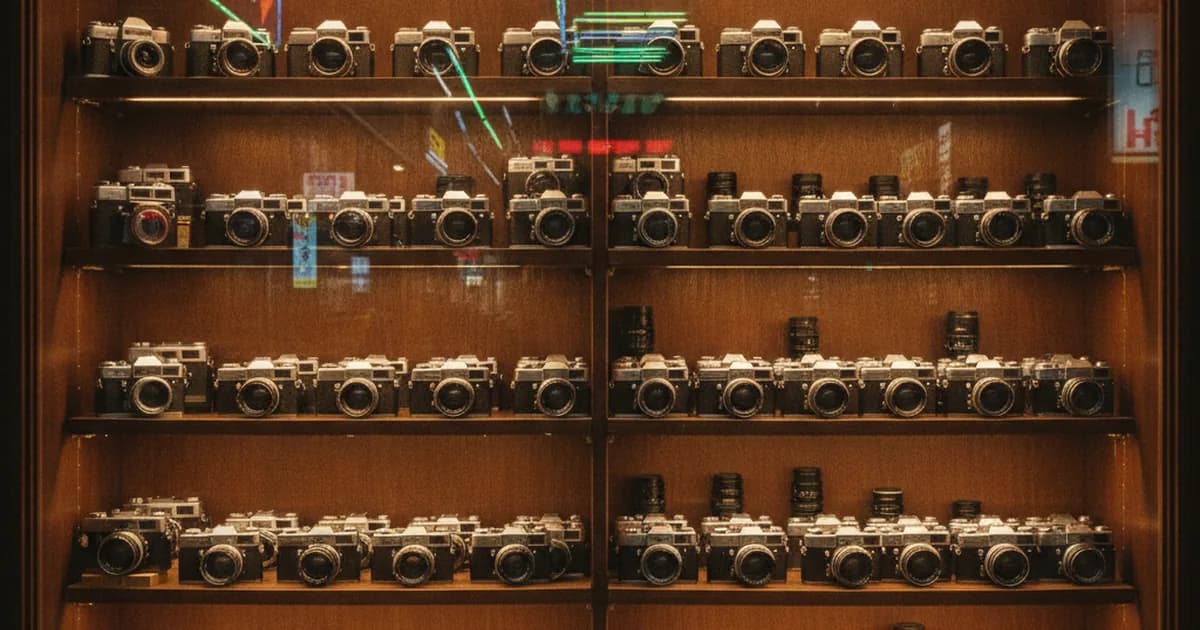
For decades, Akihabara has been Tokyo's electronics mecca, and in recent years it has also become one of the best places in the world to hunt for used cameras, both analog and digital. The neighborhood is home to everything from the region's largest electronics store to single-room shops tucked under the train tracks, packed with rare manual lenses. Let's get to the itinerary first, then to the math that matters.
Why Akihabara is the camera mecca
Akihabara is located in Chiyoda-ku, central Tokyo, and is easy to reach: the JR Yamanote, Sobu, and Keihin-Tohoku lines pass through there, as well as the Hibiya subway line. Within a few blocks, you'll find stores catering to every buyer profile, from the beginner wanting a digital compact to the collector hunting for a Leica rangefinder or a medium-format Hasselblad.
What makes Japan special for used cameras is its culture of preservation. Second-hand equipment usually hits the shelves clean, tested, and graded by condition, often looking brand new. Prices are competitive because the domestic market is huge and turnover is high. For the Brazilian photographer, this means a real chance to take home a body or lens that would be much more expensive back home, provided the exchange rate math is done carefully.
The Akihabara store itinerary
These are the most well-known shops in the neighborhood, verified as of June 2026. It's worth taking your time walking around: many are located on the upper floors of buildings, with their main storefronts up on the third or fourth floor.
- Yodobashi Camera Akiba: the largest electronics store in the Kanto region, with about nine floors. It's the natural starting point: new and used cameras, lenses, accessories, and practically everything involving photo and video in the same building. Accepts international cards without a headache.
- Nisshin Camera: an Akihabara institution, specializing in used gear. Strong in pre-owned digital cameras from Japanese brands and with a large selection of film cameras.
- Lemon Camera (Lemon-sha): the Akihabara branch, usually on the third floor near the station. Used digital and analog cameras, with strict quality control before any piece goes on sale.
- Camera Kitamura: part of a traditional chain, with separate sales and purchasing (for those wanting to sell gear) floors. Used digital, film, and medium-format cameras.
- Tokyo Camera: a street-level store focused on film, 35mm, and medium format, with a good stock of Hasselblads and vintage lenses. The right address for those who shoot analog.
- 2nd Base: hidden under the tracks in the SEEKBASE Aki-Oka complex, this is the stop for bargain hunters looking for old manual lenses and film cameras, with staff who like to offer technical advice.
- Sofmap Akiba: good for more recent used digital cameras (they don't deal with film), located in the second-hand electronics section.
If you have spare time on your trip, it's worth remembering that two of Tokyo's most famous stores are located outside of Akihabara: Map Camera, with its five-story used gear concept store in Shinjuku, and Fujiya Camera, in the Nakano neighborhood. They aren't on the Akihabara itinerary, but they easily fit into a shopping day dedicated to equipment.
A time-saving tip: in smaller, more specialized stores, inventory changes every week and isn't always online. If you're looking for a specific model, arriving early and asking at the counter usually yields better results than relying on the website.
How much it really costs to pay in Japan
Here lies the part that decides whether the camera actually came out cheap. On practically any international purchase, Brazilians pay three things that don't appear on the price tag: the IOF tax, the exchange rate spread, and sometimes a trap called DCC.
3.5% IOF, on cards and cash
Since 2025, with Decree No. 12,499/2025 (reinstated by the Brazilian Supreme Federal Court in July of that year), the IOF on international purchases was unified at 3.5% and remains in effect in 2026. The detail many people miss: this rate applies both to purchases with an international credit or debit card and to buying foreign currency in cash. In other words, the old strategy of "taking yen in cash to pay less tax" no longer makes sense, because converting to cash also incurs the same 3.5%. If you want to understand the tax in detail, it's worth reading our guide on what the IOF is.
On a ¥150,000 camera (somewhere around US$ 1,000, depending on the exchange rate), 3.5% IOF represents about US$ 35 just in taxes, before any spread. On larger purchases, the burden grows proportionally.
The spread, the invisible cost
The spread is the difference between the real exchange rate and the one your card or currency exchange office applies. On traditional cards, it usually adds 3% to 4% on top of the IOF, and is almost never highlighted on the bill. On a US$ 1,000 purchase, every 1% of spread is US$ 10 that evaporates without you seeing it. It's exactly the kind of cost that separates a well-made purchase from a poorly made one.
DCC: the card machine question that costs dearly
When it's time to pay, the Japanese card machine might ask if you want to pay in yen or in reais. It seems like a favor, but choosing reais triggers DCC (Dynamic Currency Conversion), where the conversion is done by the merchant's machine, with a much higher spread than the card network's. The golden rule is simple: always pay in the local currency, the yen. You can handle the conversion to reais later, at a much lower cost, instead of accepting the establishment's built-in fee.
How to pay while spending the minimum
Putting the three pieces together, you can build a strategy that protects your wallet without complicating your trip:
- Arrive in Japan already with a dollar balance. Locking in the exchange rate before boarding removes the anxiety of buying currency in a rush, at the airport, or at the hotel exchange desk.
- Always pay in yen. Refuse DCC on every card machine. In large stores like Yodobashi and Sofmap, contactless card payments solve almost everything.
- Use a card with no IOF and no Picnic fee. This is where the math turns in your favor. Picnic, a technology platform, offers an international account with a Visa card with no IOF and no Picnic fee: spending in dollars has zero cost, and spending in other currencies, like the yen, only incurs the Visa network margin of about 0.3%, the lowest cost in Brazil. On a US$ 1,000 camera, this is the difference between paying close to US$ 60 in fees on a traditional card and paying about US$ 3.
- Keep a small cash reserve. Large stores accept international cards with ease, but some small used gear shops and stalls still prefer cash. Having a little yen in your pocket prevents you from losing out on an item because of the payment method.
On a US$ 1,000 equipment purchase, a traditional card charges IOF (3.5%) plus spread (3% to 4%) and can take US$ 60 to US$ 75. With a card with no IOF and zero Picnic fee, spending in yen, the cost drops to around US$ 3. That's almost US$ 70 that stays in your trip budget instead of going toward fees.
To understand how this type of card works behind the scenes, the guide on how an international card works explains the mechanism calmly. And if you have doubts about annual fees, the article on international cards with no annual fee covers that point.
Apple Pay and Mobile Suica between stores
Tokyo is massive, and you'll be hopping from station to station between stores. It's worth adding your card to Apple Pay or Google Pay and activating Mobile Suica on your phone: you can top up the transit card with an international card via Apple Pay and use the same balance on the subway, at konbini (convenience stores), and in many shops, without needing to stop to withdraw cash. It's the most practical way to get around the city during a full day of bargain hunting.
Japanese tax-free: how it works (and what changes in Nov/2026)
Japan has a tax exemption for tourists, and it shouldn't be confused with the Brazilian IOF. Today, stores accredited as "Tax-Free" grant an exemption from the Japanese consumption tax (10%) at the time of purchase, on spending of ¥5,000 or more, upon presentation of a passport. In large electronics stores like Yodobashi, there are specific counters for this.
Pay attention to an important change: starting November 1, 2026, Japan will adopt a refund model. Instead of an on-the-spot exemption, tourists will pay the full price (with the 10% tax) and request a refund upon leaving the country, at the airport, before boarding, within the stipulated timeframe. If your trip is after this date, plan to keep your receipts and set aside time at the airport for the procedure.
It's worth repeating, because it confuses many people: the Japanese tax-free system deducts Japan's consumption tax. It has no relation to the IOF or the Brazilian Federal Revenue (Receita Federal) customs quota. They are separate calculations.
Returning to Brazil: the Federal Revenue quota
A camera is the type of purchase that easily blows past the exemption limit. Those arriving in Brazil by air are entitled to a US$ 1,000 exemption quota for accompanied baggage, granted every 30 days, which is individual and non-transferable (you can't pool a family's quotas together). A used Leica or a medium-format body will exceed this value on its own.
Anything exceeding the quota must be declared through the Electronic Traveler's Goods Declaration (e-DBV), and the tax is 50% on the amount that exceeds the US$ 1,000. The step-by-step guide for the form is in how to fill out the e-DBV and go through customs. Declaring is always better than risking it: customs enforcement is highly attentive to brand-name photographic equipment, and the fine for not declaring is much heavier. Official details are in the Federal Revenue's traveler's guide. For a general reference on payments and cards in Japan, the Japan-Guide is a good source in English.
Checklist for buying a camera in Japan
- Research models and price ranges in yen before traveling; used inventory changes quickly.
- Start at Yodobashi Akiba to get a price reference, and then hunt through the smaller stores (Nisshin, Lemon, Tokyo Camera, 2nd Base).
- Arrive in Japan with a dollar balance, locking in the exchange rate before your trip.
- Always pay in yen and refuse DCC on every card machine.
- Use a card with no IOF and no Picnic fee for spending in foreign currency.
- Present your passport for tax-free shopping at accredited stores (and, starting Nov/2026, keep your receipts for the airport refund).
- Bring a small yen reserve for stores that only accept cash.
- On your return, declare anything over the US$ 1,000 quota via the e-DBV.
Is it worth the effort to plan your payment?
The camera of your dreams doesn't get cheaper because of the card, but your entire trip does. Akihabara delivers the equipment; your payment method decides how much of that yen price turns into fees before it reaches your pocket. With the IOF unified at 3.5% and the spread hidden in traditional cards, every equipment purchase carries an invisible cost that disappears when you spend in local currency with a card with no IOF and no Picnic fee.
Sort this part out before boarding, pay in yen, refuse DCC, and leave the savings in your suitcase, right next to your new lens, instead of leaving it in fees. The same reasoning applies to any shopping destination outside Brazil, as shown in the guide on how to pay at Shopping China in Paraguay, or for a family trip, like in the itinerary on how much it costs and how to spend at Disney.
Spend in yen in Japan and stop losing money on exchange rates. Discover the Picnic card.
Picnic is a technology platform that lets users independently interact with USDC, a U.S. dollar-pegged stablecoin issued by Circle, on public blockchains. USDC is not legal tender in Brazil.
Displayed exchange rates vary with market conditions. The final applicable amount is the one shown on the transaction confirmation screen. Cryptoassets involve risks, including volatility and loss of peg.
Picnic does not custody user assets and is neither a financial institution nor a virtual asset service provider. Sending and receiving U.S. dollar payments through a U.S. account is offered in partnership with Noah Savings Inc. Terms and conditions apply.
Information verified in June 2026.

Picnic team
Technology platform
The Picnic team creates content about international finance, cards and digital dollars.
Get your Picnic card
No annual fee, no IOF and no Picnic fee. Open your account in five minutes.
Open your account →