
Best Card to Use in Mexico (Cancún) in 2026
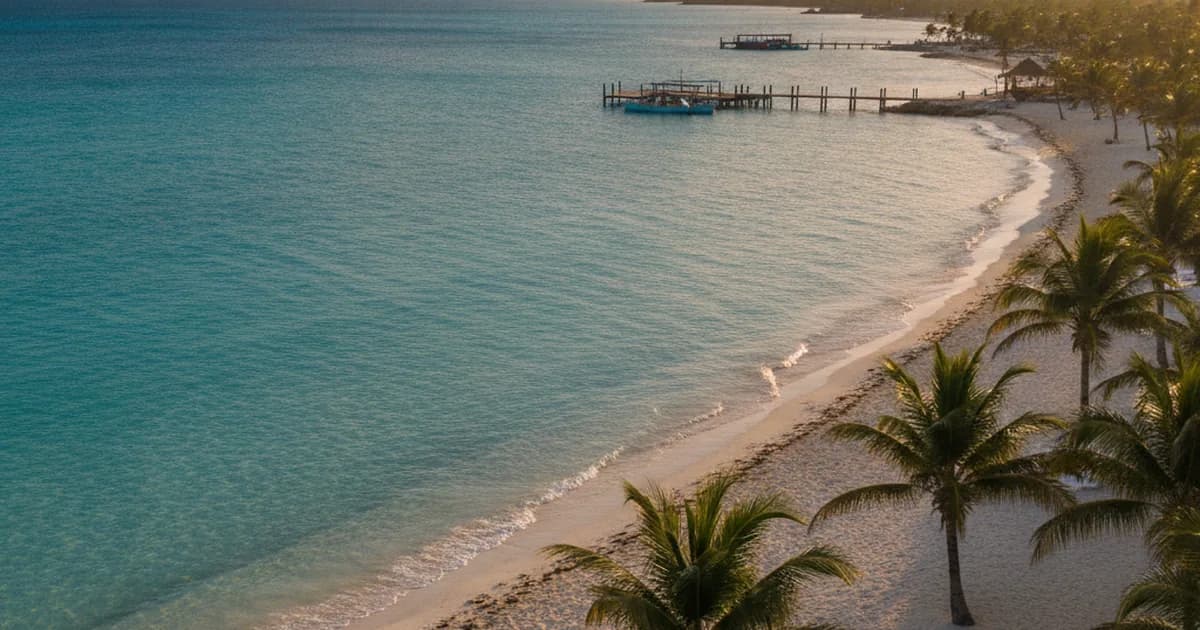
In Cancún, almost everything is priced in dollars. The restaurant menu, the boat tour, the shop at the mall, the card terminal when you pay: in many places the amount shows up in USD before it shows up in pesos. It looks convenient for a Brazilian, but that is exactly where the trap is. Agreeing to pay in dollars (or, worse, in reais) almost always means accepting a worse exchange rate than your card's. Mexico has no tourist exchange rate like Argentina's, so what decides the cost of your trip is not the counter in Cancún but how much your card charges on the Brazilian side before the purchase even gets there.
And that difference is large. On the same spending in Mexican pesos, a traditional credit card can charge more than 7% between IOF (Brazil's tax on financial operations) and spread, while a card without those fees costs around 0.3% on the purchase itself. Over a week between the Riviera Maya, the theme parks and shopping, that can easily add up to hundreds of reais. The cost logic is the same as for any destination and follows the same reasoning as the best card to use in the US. What changes in Mexico is the dollar noise everywhere, which pushes tourists toward the most expensive choice without them noticing.
Picnic is a technology platform that has operated globally since 2021 and offers, in Brazil and Europe, an international account with a Visa card tied to a digital dollar balance. It is not a bank. The data in this article was originally verified in July 2026 and reviewed in November 2026.
Summary: the cheapest card for Mexico in 2026
| Card | IOF (Brazilian side) | Issuer spread | Exchange rate in Mexico | Total cost, Brazilian side |
|---|---|---|---|---|
| Picnic | 0% | 0% | market rate | ~0.3% on the purchase (Visa's margin); ~0.6% if you start from reais |
| Global account / Wise (standard) | 3.5% | from ~0.78% | market rate | ~4.3–5.5% |
| Bank card (C6, Inter) | 3.5% | 0.4–2% | market rate | ~5.2–6.8% |
| Traditional credit card | 3.5% | 1–4% | market rate | ~5.8–9% |
| Dollars or pesos in cash | 3.5% on buying foreign cash | exchange bureau spread | counter rate | IOF plus a high spread on the Brazilian side |
Look at the exchange-rate column: in Mexico, the network rate is the same for every foreign card. Nobody gets a better rate just for being a tourist, as Argentina's special rule for foreign cards once allowed. That is why the last column, the cost on the Brazilian side, decides everything. Picnic charges no IOF and no spread of its own on card spending, leaving only the unavoidable Visa network margin of around 0.3%, which applies only when there is a conversion, as with Mexican pesos. On purchases and subscriptions already in dollars there is no conversion, so the card cost is zero.
That is not the whole path, though. If you start with reais, you first convert BRL to digital dollars in the app. Picnic adds no IOF and no margin of its own on that conversion, but the rate currently includes the provider's cost, around 0.3%, shown in the app before you confirm. Starting from reais and spending in pesos, the full path therefore comes to about 0.6% in the standard scenario. The sections below show where each number comes from.
Card availability: new Picnic card orders have been temporarily paused since September 22, 2026 (notice in Portuguese), with no confirmed date for reopening. Existing cards keep working normally until December 20, 2026, at 23:59 UTC; after that, cardholders continue on Gnosis Pay's new infrastructure through an upgrade in the app, which starts with the virtual card (the physical card has no confirmed date yet). If you do not have the card yet, choose another option for an upcoming trip.
Mexico has no tourist exchange rate
In late 2022, Argentina began giving purchases made with cards issued abroad a special rate for foreign tourists, close to the MEP dollar and better than the official rate. It was an Argentine rule, tied to its currency controls, and its relevance has changed as those controls were relaxed; the Argentina guide covers the current situation. Many people assume that Mexico, being such a popular destination, has something similar. It does not.
In Mexico, the peso floats freely and there is a single exchange rate. Your card converts the spending in Mexican pesos at the market rate of the Visa or Mastercard network, the same rate any foreigner gets. There is no bonus for being a tourist. If you want to understand how the tourist rate works in the Argentine case, the guide on the best card to use in Argentina explains the rule in detail. Here the opposite applies, as in Chile: since there is no local discount, the only game left is to minimize what you pay in Brazil.
That makes the choice of card more decisive. With no favorable rate to compensate, a card with high IOF and spread has nothing to soften the bill. You pay the market rate like everyone else and still stack the Brazilian fees on top.
The costs on the Brazilian side: IOF, spread and Visa's margin
On a purchase in Mexico, your card can charge up to three layers of cost on the Brazilian side. Understanding all three is what lets you pick a card that eliminates two of them. For the full picture, the guide on how an international card works traces the path of each purchase.
1. IOF (Tax on Financial Operations)
Since mid-2025, the IOF has been unified at 3.5% for purchases abroad with credit, debit and prepaid cards. The rule is in Decree 12,499/2025. For most cards, it is the largest component of the cost of a trip to Mexico. A word of warning: some guides still quote IOF rates of 5.38% or 6.38%, which are outdated. The current rate is 3.5%.
There is one path where the rate is different. Picnic currently charges 0% IOF on card spending, because your balance is held in digital dollars and does not go through the traditional foreign exchange operation that triggers the tax. BCB (Brazil's Central Bank) Resolution No. 521/2025 classified certain digital-dollar operations as foreign exchange operations, and whether the 3.5% IOF applies to card transactions of this kind still depends on complementary regulation. It does not currently apply. For the full treatment of the topic, see the guide on what IOF is.
2. Issuer's spread
This is the margin that the bank or fintech adds to the exchange rate. It ranges from 0% (Picnic, on card spending) to more than 4% on some traditional credit cards. It is the most opaque part of the math, because almost no issuer shows this margin separately. It comes embedded in the rate that appears on your statement, so you rarely notice you paid it. The concept is detailed in exchange spread.
3. Visa network exchange margin
The purchase in Mexico is in pesos, so there is a conversion, and every conversion on the Visa network carries the network's own margin of approximately 0.3%. You can check the rate used on the official Visa exchange rate calculator. Because it is a network margin, every Visa card pays it, including Picnic. It is the cost floor for any purchase in Mexican pesos.
There is also a fourth charge, behind the scenes: the ISA fee of about 1% that Visa charges issuers on international transactions. Most cards pass this fee on to you, embedded in the final cost. Picnic absorbs the ISA fee, so it does not enter your math.
Comparison: card options for Mexico
Each type of card combines these layers differently. They all get the same market rate in Mexico, so what separates them is the cost on the Brazilian side.
Picnic
Zeroes out the IOF and the issuer's spread on card spending, leaving only the Visa exchange margin (about 0.3%), which applies only when there is a conversion, as with Mexican pesos. Purchases and subscriptions already in dollars carry no such margin, with 0% spread and 0% IOF. If you load the balance from reais, add the provider's cost of around 0.3% included in the BRL to USD rate, for about 0.6% on the full path. Even so, it is among the lowest total costs available in Brazil for spending in Mexican pesos. Because the balance is in digital dollars, you spend in pesos on the spot, at the market rate, and your dollar balance is only touched at the moment of purchase. The card works with Apple Pay and Google Pay, has virtual cards and is an international card with no annual fee. The honest caveat: because it is tied to a balance, it works like debit, with no credit limit, installments or traditional points. New orders are currently paused (see the note above), so this applies to people who already have the card. This trade-off helps explain who the Picnic card makes sense for.
Global accounts and exchange fintechs (Wise and similar)
They are a solid option and much cheaper than a traditional bank. Wise uses a rate close to the commercial rate, with a conversion fee starting at about 0.78%, and charges 3.5% IOF on the standard path (or 1.1% if the balance first goes through an investment account). It is predictable and transparent. The weak point for Mexico is the 3.5% IOF in common use, which on its own already exceeds Picnic's total cost.
Digital bank card (C6, Inter, Bradesco)
Convenient if you are already a customer, with the whole account in a single app. It pays the 3.5% IOF and adds a spread of 0.4% to 2% depending on the issuer, besides passing on Visa's ISA fee. The total cost tends to fall between 5.2% and 6.8% on spending in pesos. It is usually worth it for convenience, not price.
Traditional credit card
It has the advantage of the billing cycle and points. In travel cost, it is generally the most expensive: 3.5% IOF, a spread that can reach 4% and the ISA fee passed through, adding up to between 5.8% and almost 9%. On spending equivalent to US$1,000 in Mexican pesos, that is about US$75 in Brazilian-side fees alone, versus about US$3 on the Picnic card purchase (about US$6 if you also count loading the balance from reais). The difference of roughly US$70 is real, and it disappears from your pocket without the statement showing where it went.
Cash
In Mexico, cash is a backup, not a strategy. Buying Mexican pesos or dollars at Brazilian exchange bureaus usually comes with a high spread plus the 3.5% IOF on buying foreign currency in cash, and you are locked into that day's rate. Taking dollars to exchange for pesos there also has a cost: exchange bureaus in Cancún charge their own spread, and some quote worse rates near the tourist zones. The best approach is to handle almost everything by card, in local currency, and carry a small cash reserve only for where the card does not reach.
The dollar trap in Cancún: always pay in pesos
This is the most important warning for a trip to Mexico, and it is different from the rest of the world. In Cancún and the Riviera Maya, dollars circulate everywhere. Restaurants, tours, shops and even taxis often advertise prices in USD and offer to charge in dollars when you pay. Because Brazilians are used to thinking in dollars, the temptation is to accept. Do not.
When the terminal asks whether you want to pay in dollars, reais or pesos, it is offering Dynamic Currency Conversion, or DCC. The conversion is then done by the merchant, at a rate that, as Visa explains, includes the merchant's exchange rate and additional fees, usually costing more than letting the network convert. The merchant must offer you the choice and must not choose for you. The same goes when the price is already in dollars: paying that USD amount often works out more expensive than letting your card convert the peso price at the network rate.
The rule is simple and does not change: always ask to be charged in Mexican pesos and let your card do the conversion. If the terminal screen shows dollars or reais, decline and choose pesos. The full reasoning is in paying in reais or local currency. With a low-cost Brazilian card like Picnic, paying in pesos is the cheapest path, even in a place where everyone talks in dollars.
Card or cash in Mexico: where each one works
Mexico accepts cards widely in tourist areas. In Cancún, Playa del Carmen, Tulum, Mexico City and the major destinations, hotels, restaurants, malls, theme parks and chains accept Visa almost everywhere, including contactless and on your phone with Apple Pay and Google Pay. For most of a typical trip, the card does the job.
Cash still matters in some places. Markets, small shops, beach stalls, tips and informal taxis tend to work better with pesos in hand. Outside the tourist hubs, in smaller towns and in the countryside, card acceptance drops and it is wise to carry a bigger reserve. The strategy that almost always wins is to put the bulk on the card, in local currency, and use cash only for the edges.
ATM withdrawals in Mexico: watch the fees
If you need pesos in cash, be aware that Mexican ATMs are expensive. Besides the fixed fee the local bank charges per transaction, many ATMs in tourist zones push DCC aggressively, offering to convert the withdrawal into dollars or reais on the screen itself, always at a worse rate. Add the 3.5% IOF that also applies to withdrawals abroad on most cards, and each withdrawal becomes one of the most expensive expenses of the trip.
That is why withdrawing cash in Mexico should be the exception. Pay by card whenever possible, so you pay only the market rate plus the Brazilian-side cost, and withdraw only the little that needs to be in cash. If you do withdraw, prefer ATMs from large banks such as BBVA, Santander or Banorte over tourist and airport machines, make larger and less frequent withdrawals to dilute the fixed fee, and decline DCC on the ATM screen too. If you already have a Picnic physical card, it supports withdrawals on the Visa network, subject to network costs and per-transaction limits. Check the limit and the direct cost in the app before you travel, and keep in mind that the new card version starts with the virtual card only. The general rules are in ATM withdrawals abroad.
Bonus: foreign tourists can recover VAT on purchases
Here is a detail few people mention, and it can pay off on larger purchases. Mexico charges 16% IVA, its value-added tax. According to SAT, Mexico's tax authority, non-resident foreign tourists can request a refund of this tax on goods bought at stores participating in the program, provided they leave the country by air or sea, keep the tax receipts and take the goods with them. The minimum purchase is 1,200 pesos per store with electronic payment, and the claim is made at the program's desks in ports and airports, including Cancún.
It is neither automatic nor universal: it only applies at participating stores, requires the tax receipts, and the purchase generally has to be paid with a card issued outside Mexico (or in cash, up to 3,000 pesos per tourist). The practical point is that paying with a foreign card, such as Picnic if you already have one, is exactly what usually makes you eligible for the refund. If you plan larger purchases, ask the store whether it participates in the program, keep the receipts, and check the current rules before you travel, since the amount actually refunded can be lower than the full 16%.
How much cash to bring, and tipping
There is no magic number, but here is a practical reference: bring a small reserve in pesos or dollars for your first moments and for situations without a card, such as beach stalls, informal taxis and tips. In Mexico, a tip (propina) is expected at restaurants and usually runs between 10% and 15% of the bill; you can add it on the card when the terminal allows, or leave it in pesos on the table. For a one-week trip to Cancún, the equivalent of US$150 to US$250 in cash usually covers the essentials, with the rest going on the card. If your itinerary includes smaller towns or stretches off the tourist circuit, plan a larger reserve.
Final summary
In Mexico, as in Chile and unlike Argentina, there is no tourist exchange rate. Every foreign card gets the same market rate, so the savings do not come from the local exchange rate but from choosing a card that does not eat your money on the Brazilian side. Three layers weigh on that bill: IOF (3.5% on the standard path), the issuer's spread (0% to 4%) and the Visa network margin (around 0.3%, unavoidable). Picnic zeroes out the first two on card spending and keeps only the Visa margin, around 0.3% on the purchase; if you start from reais, the BRL to USD conversion currently adds the provider's cost of around 0.3%, for about 0.6% in total.
Three reminders before you fly: in Cancún, ignore the dollar prices and always pay in pesos, declining DCC; avoid ATM withdrawals because the fees are high; and if you plan large purchases, ask about the VAT refund for foreign tourists. With the right card, you enjoy the beach, the parks and the shopping while paying as little as possible in fees. If you already have a Picnic card, keep your balance in digital dollars and pay in pesos; if you do not, check current card availability before planning around it.
Picnic is a technology platform that lets users independently interact with USDC, a U.S. dollar-pegged stablecoin issued by Circle, on public blockchains. USDC is not legal tender in Brazil.
Displayed exchange rates vary with market conditions. The final applicable amount is the one shown on the transaction confirmation screen. Cryptoassets involve risks, including volatility and loss of peg.
Picnic does not custody user assets and is neither a financial institution nor a virtual asset service provider. Sending and receiving U.S. dollar payments through a U.S. account is offered in partnership with Noah Savings Inc. Terms and conditions apply.
Information verified in November 2026.

Picnic team
Technology platform
The Picnic team creates content about international finance, cards and digital dollars.
Get your Picnic card
No annual fee, no IOF and no Picnic fee. Open your account in five minutes.
Open your account →